New Jersey can have a grand jury investigate clergy sex abuse allegations, high court rules

Associated Press, Mike Catalini, June 16, 2025
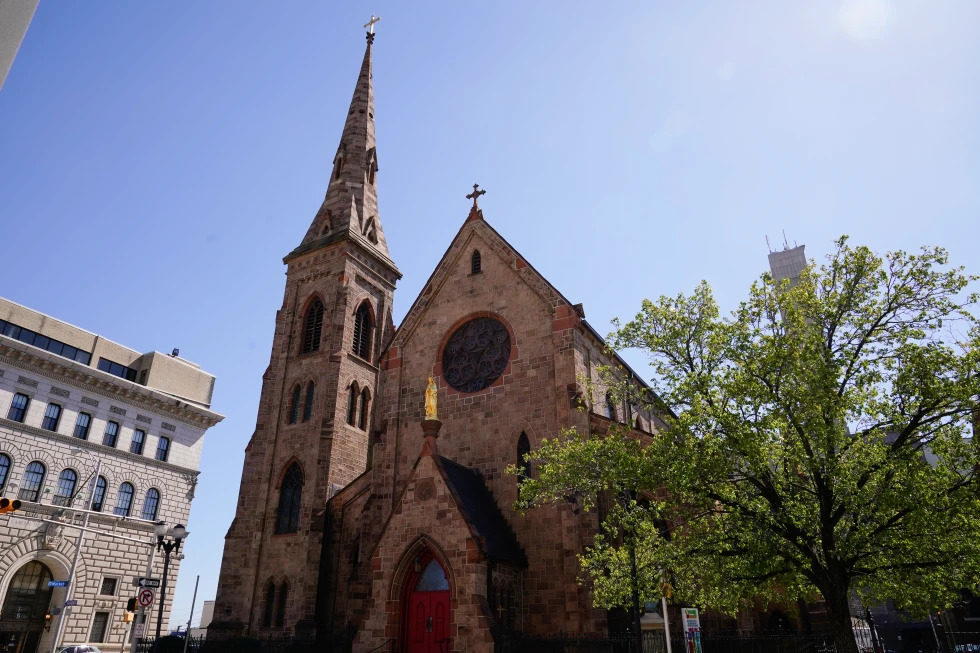
The Cathedral of the Immaculate Conception in Camden, N.J., Wednesday, April 20, 2022. (AP Photo/Matt Rourke, File)

TRENTON, N.J. (AP) — New Jersey can have a grand jury examine allegations of clergy sexually abusing children, the state’s Supreme Court ruled Monday, after a Catholic diocese that had tried for years to block such proceedings recently reversed course.

The Diocese of Camden previously had argued that a court rule prevents the state attorney general from impaneling a grand jury to issue findings in the state’s investigation into decades of allegations against church officials. But the diocese notified the court in early May that it would no longer oppose that. Camden Bishop Joseph Williams, who took over the diocese in March, said he’d met with stakeholders in the diocese and there was unanimous consent to end the church’s opposition to the grand jury.

The seven-member Supreme Court concluded such a grand jury inquiry is allowed.

“Courts cannot presume the outcome of an investigation in advance or the contents of a presentment that has not yet been written,” the court wrote in an opinion joined by all seven justices. “We find that the State has the right to proceed with its investigation and present evidence before a special grand jury.”

The state attorney general’s office praised the decision in an emailed statement and said it’s committed to supporting survivors of sexual abuse.

“We are grateful for the New Jersey Supreme Court’s decision this morning confirming what we have maintained throughout this lengthy court battle: that there was no basis to stop the State from pursuing a grand jury presentment on statewide sexual abuse by clergy,” First Assistant Attorney General Lyndsay V. Ruotolo said in an emailed statement.

The Camden Diocese is still committed to cooperating with the effort, it said in a statement.

“To the victims and all those impacted by abuse, we reaffirm our sorrow, our support, and our unwavering resolve to do what is right, now and always,” the diocese said.

An email seeking comment was sent Monday to the Catholic League, an advocacy and civil rights organization that still opposed the grand jury after the diocese’s change.

Where New Jersey’s investigation began

Pennsylvania grand jury report in 2018 found more than 1,000 children had been abused in that state since the 1940s, prompting the New Jersey attorney general to announce a similar investigation. The results of New Jersey’s inquiry never became public partly because the legal battle with the Camden diocese was unfolding amid sealed proceedings.

Then this year, the Bergen Record obtained documents disclosing that the diocese had tried to preempt a grand jury and a lower court agreed with the diocese.

The core disagreement was whether a court rule permits grand juries in New Jersey to issue findings in cases involving private individuals. Trial and appellate courts found that isn’t allowed.

Hearing arguments on April 28, members of the high court repeatedly questioned whether challenging the state was premature, since lower court proceedings prevented New Jersey from seating a grand jury that would investigate any allegations or issue findings, called a presentment.

Lloyd Levenson, the church’s attorney, answered that “you’d have to be Rip Van Winkle” not to know what the grand jury would say.

“The goal here is obviously to condemn the Catholic Church and priests and bishops,” he said.

The court said Monday it wasn’t ruling on any underlying issues and a trial court judge would still have the chance to review the grand jury’s findings before they became public.

Mark Crawford, state director of the Survivors Network for those Abused by Priests, said Monday in a text message he’s “elated” by the court’s decision.

“Decades of crimes against children will finally be exposed,” he said.

How the diocese won early rulings

In 2023, a trial court judge sided with the diocese, finding that a grand jury would lack authority because it would be focused on “private conduct,” rather than a government agency’s actions. An appeals court affirmed that judgment last year, and the attorney general’s office appealed to the state Supreme Court.

Documents the high court unsealed in March sketched out some of what the state’s task force has found so far, without specific allegations. They show 550 phone calls alleging abuse from the 1940s to the “recent past” came into a state-established hotline.

The diocese argued a grand jury isn’t needed, largely because of a 2002 memorandum of understanding between New Jersey Catholic dioceses and prosecutors. requiring church officials to report abuse.

But the Pennsylvania report led to reexamining the statute of limitations in New Jersey, where the time limits on childhood sex abuse claims were overhauled in 2019. The new law allows child victims to sue until they turn 55 or within seven years of their first realization that the abuse caused them harm. The previous statute of limitations was age 20, or two years after realizing abuse caused harm.

Also in 2019, New Jersey’s five Catholic dioceses listed more than 180 priests who have been credibly accused of sexually abusing minors over several decades. Many listed were deceased and others removed from ministry.

The church has settled with accusers

The Camden diocese, like others nationwide, filed for bankruptcy amid a torrent of lawsuits — up to 55, according to court records — after the statute of limitations was relaxed.

In 2022, the diocese agreed to pay $87.5 million to settle allegations involving clergy sex abuse against some 300 accusers, one of the largest cash settlements involving the Catholic church in the U.S.

The agreement, covering six southern New Jersey counties outside Philadelphia, exceeded the nearly $85 million settlement in 2003 in the clergy abuse scandal in Boston, but was less than settlements in California and Oregon.
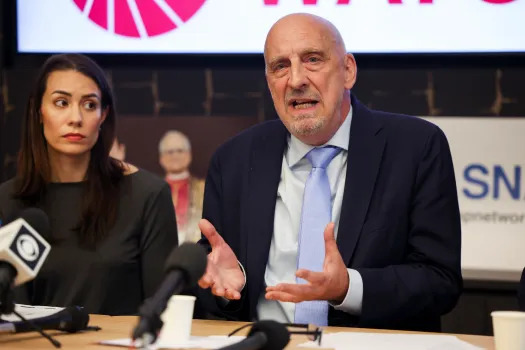
Read story at the Associated Press

Pope Leo XIV: Victims’ group alleges mishandling of sex abuse claims

Chicago Tribune, Rebecca Johnson, May 20, 2025

Peter Isely, one of the founders of the Survivors Network of those Abused by Priests and a survivor of sexual abuse by a priest, speaks during a news conference discussing Pope Leo XIV’s past and what SNAP would like him to do regarding sexual abuse in the Catholic Church, on May 20, 2025 (Eileen T. Meslar/Chicago Tribune)

A group representing victims sexually abused by Catholic priests alleged on Tuesday Pope Leo XIV has exhibited a “pattern of failure to properly investigate abuse claims,” including allegations that the Chicago-born pontiff mishandled multiple cases while in prominent leadership roles in the city.

“It was his responsibility to follow the meager church protocols and laws put in place,” said James Egan, a spokesperson for the Survivors Network of those Abused by Priests, at a news conference. “Given his record, it doesn’t seem that (he) prioritized protecting children at all.”

A longtime missionary, Pope Leo XIV was born Robert Prevost in 1955 at Mercy Hospital in Chicago, and grew up in south suburban Dolton. Prevost, the first American pope, was largely welcomed with open arms across the city, and described as someone who “cared for people.”

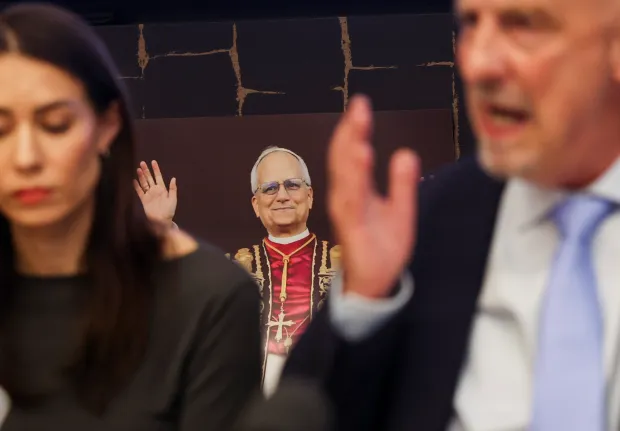
A photograph of Pope Leo XIV rests on a table behind Peter Isely, one of the founders of Survivors Network of those Abused by Priests and a survivor of sexual abuse by a priest, as he speaks during a news conference discussing Pope Leo XIV’s past and what SNAP would like him to do regarding sexual abuse in the Catholic church, on May 20, 2025. (Eileen T. Meslar/Chicago Tribune)

He called for environmental stewardship and caring for the poor in his inaugural Mass.

SNAP, however, said it wants to bring light to the “underground story of Prevost,” urging him to adopt policies to better protect children. The group filed a complaint against Prevost with the Vatican in March outlining his alleged missteps in Chicago while heading the Midwest Augustinian religious order and later as a bishop in Peru.

The Rev. Anthony Pizzo, current provincial of the Augustinians of the Midwest, said in response to the news conference that the order remains “steadfast in our commitment to the safety and well-being of the children and youth entrusted to our care.” He said Pope Leo established protocols for promoting child protection in 2001, and that his record shows a “dedication to child safety.”

“We know that the Pope will persist in his perseverance to protect children and vulnerable persons and to respond with care and compassion to those who come forward with allegations of abuse by the Church’s ministers,” Pizzo said.

Prevost was elected as provincial prior in Chicago in 1999, and later as the order’s worldwide leader. During that time, he came under fire for his handling of two sex abuse cases involving Augustinian priests in the area.

SNAP accused Prevost of allowing the Rev. James Ray, a priest accused of abusing minors and whose ministry had been restricted since 1991, to live at the Augustinian’s St. John Stone Friary in Hyde Park in 2000 despite its proximity to a Catholic elementary school.

Ray, who was ordained in 1975 and laicized in 2012, had 13 reported accusers, according to a 2023 report from the Illinois attorney general. He has never been convicted of a sex offense.

The Vatican previously denied that Prevost approved the accommodation. Ray claimed in a Tuesday article published in the Sun-Times that Prevost “gave me permission to stay there.”

“We are not going to comment on third-party conversations that a reporter from another newspaper claims to have had with another individual, at this time,” Michael Airdo, an attorney for the Midwest Augustinians, said in a statement.

Airdo said Ray was placed at the friary from 2000 to 2002 as an “accommodation” to the late Cardinal Francis George as head of the Chicago archdiocese, and that he was “subject to restrictions” because of the abuse allegations. He said there were no allegations that Ray committed abuse while living there.

In cases where “established accusations” against a priest were brought to him, Airdo said Prevost “applied precautionary measures to remove the accused friar from active ministry, placing him in a setting where there would be no risk to minors.”

SNAP also condemned the order’s handling of allegations against the Rev. Richard McGrath, former president of Providence Catholic High School in New Lenox. McGrath served for 32 years as principal and then president of the school before retiring amid complaints that he had abused a student and had pornography on his phone. The order settled one accuser’s lawsuit for $2 million in 2023. McGrath was never criminally charged.

SNAP released a letter presumably from a parent to the Midwest Augustinians, asking them to stop McGrath from giving “back rubs to the boys at Providence.”

The group also pointed to the handling of John D. Murphy, who left the priesthood in 1993 after multiple abuse claims. The order has acknowledged it received an allegation against Murphy in 1981 but returned him to ministry after he received treatment. The order ultimately settled claims by 13 people in 2004 who said they had been molested by Murphy.

Murphy got a job in 1994 at the Shedd Aquarium, which included leading tours with children. The aquarium said it hired Murphy based on a “positive written record” from the order’s personnel director. He resigned in 2003.

“What was Prevost’s record? We see case after case of Augustinians — their abuse being covered up or ignored for years,” Egan, the SNAP spokesperson, said. “They were routinely put in roles that allowed them continued access and proximity to children.”

“Prevost, as head of the Augustinian order, had full responsibility for all of this, given the nature of his role,” Egan added. “Every case that came forward to the Augustinians was his responsibility to handle.”

SNAP called on Prevost to adopt a “zero tolerance law” into canon law and to submit to international legal agreements mandating transparency and accountability. They said he should make public statements related to sexual abuse and the cover-up by the Catholic Church.

“A child right now that’s being assaulted somewhere in the world — because that’s what’s happening right now — by some priest or some clergy, that child is more important than Pope Leo,” said Peter Isely, a founding member of SNAP.

Read story at the Chicago Tribune

Clergy molestation survivors concerned and insulted by election of Pope Leo XIV

Pope faced questions about his handling of clerical sexual abuse cases earlier in his career after a survivors group filed a complaint

The Guardian, Ramon Antonio Vargas, May 9, 2025

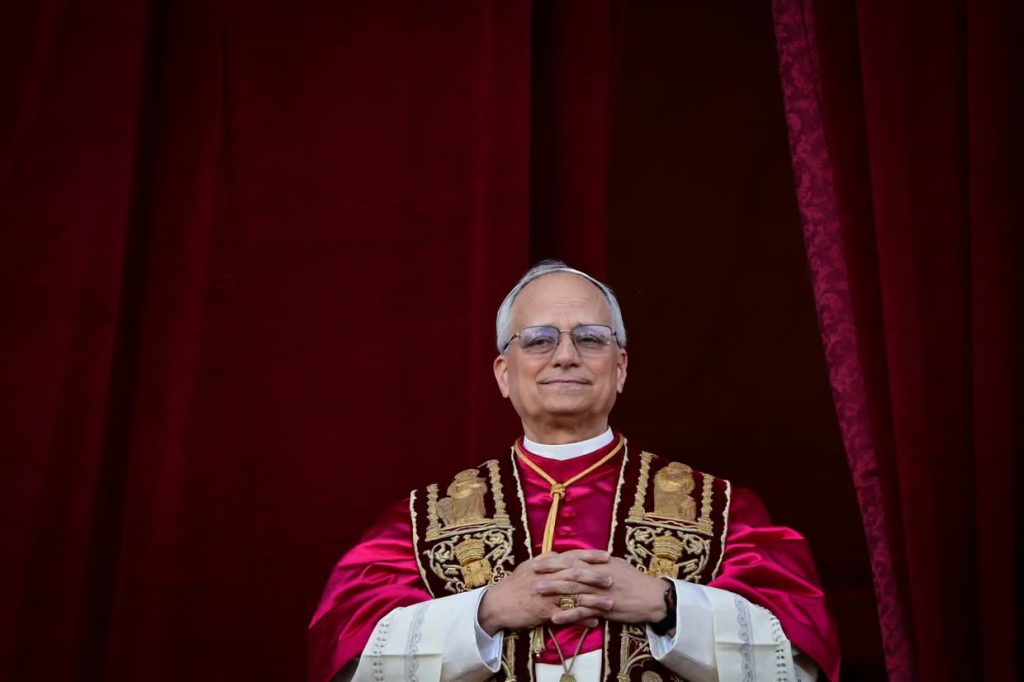
Pope Leo XIV at St Peter’s Basilica on Thursday. (Tiziana Fabi/AFP/Getty Images)

Groups supporting clergy-molestation survivors say they are gravely concerned and insulted by the election of Pope Leo XIV after he overcame questions about his handling of clerical sexual abuse cases earlier in his career to become the Roman Catholic church’s first-ever US-born leader.

Before Robert Prevost’s ascent to the papacy at age 69, he was leading a chapter of the Augustinian religious order in his home town of Chicago when allegations surfaced that a priest and Catholic high school principal under his jurisdiction had molested at least one student as well as kept child-abuse imagery.

Prevost reportedly allowed that cleric to continue in his role despite the allegations, though the Augustinian order later paid a multimillion-dollar settlement to the abuse survivor and in December booted the priest from the order.

Meanwhile, Prevost also did not impede another priest – whose ministry had been restricted in the wake of allegations that he abused minors – from living at an Augustinian residence that was near a Catholic elementary school. And, while serving as a bishop in Peru, Prevost heard from three women who accused two priests there of sexually abusing them as minors and have since claimed there is no evidence that much was done to investigate the cleric.

That history prompted the Survivors Network of those Abused by Priests (Snap) to file a complaint against Prevost in March under church legislation implemented by the late Pope Francis that provided potential disciplinary measures against bishops who were found to have turned a blind eye to abuse of both children and adults considered vulnerable.

The complaint did not prevent Leo from being elected on Thursday after a short conclave at the Vatican, which prompted Snap to quickly issue a statement expressing “grave concern about his record managing abuse cases”.

“You can end the abuse crisis,” Snap’s statement said of Leo, who has not been accused of abuse himself and had previously headed the Vatican entity in charge of selecting new bishops from around the world. “The only question is: will you?”

In a separate statement, the Survivors of Childhood Sex Abuse (SCSA) said Leo’s election was “an insult” given that he was produced by the same Catholic hierarchy that has failed to grapple with the scale and systemic nature of the global church’s decades-old clergy molestation scandal.

“The Catholic hierarchy has not merely mishandled abuse allegations – it industrialized the process,” the SCSA’s statement said. “Pope Leo XIV … was in the rooms for all of it.”

Both organizations urged Leo to implement a true zero-tolerance policy with respect to taking action against clergy abuse claims as well as to provide victims of the scandal with reparations from church assets, among other demands.

Mitchell Garabedian, the Boston attorney who represented abuse survivors amid the clergy molestation scandal depicted in the Oscar-winning movie Spotlight, added: “The Catholic church has to understand that the safety of innocent children cannot be sacrificed for an outdated and inexcusable need to protect the reputation of the Catholic church.”

The Vatican’s press office did not immediately respond to requests for comment about the statements from Snap and SCSA. It has generally maintained that Prevost is free of any wrongdoing or followed canonical norms in the clergy abuse cases he has confronted.

Some of the scrutiny surrounding Prevost’s handling of those cases dates back to his 11-year tenure leading the Augustinian order’s midwest chapter in Chicago beginning in 1999. It was at some point “during his tenure”, NBC News reported, that claims surged saying the principal of Providence Catholic high school in New Lenox, Illinois, which was part of Prevost’s territory, had molested a student and possessed images of child abuse on his phone.

A statement issued on 12 May by an attorney representing the order’s midwest chapter disputed that. The statement said formal allegations against McGrath did not arise until late December 2017, after Prevost had already left. It also said the alleged abuse occurred between 1995 and 1996 at a time when Prevost was not working there.

Prevost – who was also the Augustinians’ worldwide leader for 12 years beginning in 2001 – never removed the principal, an Augustinian priest named Richard McGrath, as the Chicago Sun-Times has previously reported.

McGrath retired in 2017 after being faced with an investigation into the claims against him.

The abused student, Robert Krankvich, then sued in 2018. And in late 2023 the church agreed to pay him $2m – before Krankvich died in April at age 43.

“Money doesn’t bring happiness,” Krankvich’s father, also named Robert, said to the Sun-Times. “It gave him no closure.”

During Krankvich’s lawsuit, McGrath declined to answer whether or not he possessed child abuse images, invoking his constitutional right against self-incrimination, the Sun-Times reported. Yet McGrath denied molesting Krankvich and was kept off a list of alleged Augustinian abusers published in 2024, though he resigned in light of the claims against him.

Monday’s statement from the midwest US Augustinians said the order lacked the required “moral certitude” to include McGrath on the list of alleged abusers.

Separately, in a statement issued on 6 May, the Augustinians confirmed McGrath had been expelled from their order, according to New Lenox’s Patch news website. But the order’s later statement said “grounds for his dismissal had nothing to [do] with any allegations of sexual abuse” and instead involved “a prolonged period of disagreement with his direct superior”.

It also said McGrath remained a member of the clergy but could not publicly minister.

The Augustinians reportedly did not disclose the factors behind McGrath’s dismissal, which occurred in December but was first reported on the eve of the start of the two-day conclave that vaulted Prevost to the papacy.

Separately, in 2000 and still early in Prevost’s stint as the midwestern US Augustinian chapter, the order stationed a member priest named James Ray in its St John Stone Friary in Chicago. The friary was adjacent to an elementary school, and since 1991, Ray was restricted from working around children because of accusations that he had molested minors. Survivors groups say those moves are not indicative of an organization doing everything it can to protect children. The Vatican has reportedly countered that Prevost was not the one who authorized Ray’s living arrangements at the friary.

Prevost subsequently spent eight years as the bishop of Chiclayo, Peru, beginning in 2015. According to a statement that they issued, three women told Prevost directly that they had allegedly been abused as minors by local priests named Eleuterio Vásquez González and Ricardo Yesquén.

But the women said they had no evidence any meaningful investigation into their claims ensued, and at one point they published several images showing Vásquez publicly celebrating mass on important occasions such as Easter despite purported assurances to them that he was suspended from such ministry, as the National Catholic Reporter noted in reporting on a case rife with conflicting claims.

Chiclayo’s diocese reportedly said the Vatican agency which investigates clerical sexual abuse cases found insufficient evidence to substantiate the accusers’ allegations – and that local law enforcement authorities reached a similar conclusion, in part citing the lapse of an applicable statute of limitations.

One of the accusers, Ana María Quispe, lamented in Spanish to the Peruvian television news program Cuarto Poder: “They have always told us the church is our mother – but a mother protects.”

For its part, Chiclayo’s diocese reportedly said “it is not true” that Prevost and the church “turned its back on the alleged victims”. The diocese reportedly said the accusers remained free to pursue complaints in civil court and have a standing offer of church-provided “psychological help if they required it”.

A statement from BishopAccountability.org contended that Prevost never published a list of accused abusers under his supervision, unlike many Catholic dioceses and religious orders which did as an offering of conciliation over the scourge of clergy molestation within the worldwide church.

Francis, who died on 21 April, made Prevost a cardinal in September 2023. A reputation as a “moderating influence” among the ideologically disparate bishops in Peru evidently helped Leo clinch the papacy – somewhat unexpectedly – on Thursday.

Read story at The Guardian

Victims’ group alleges Pope Leo XIV mishandled sexual abuse cases involving priests in Chicago and Peru

CNN, Bob Ortega and Rob Kuznia, May 9, 2025

This undated photo shows Robert Francis Prevost. Prevost was Bishop of Chiclayo, Peru, from September 26, 2015, to 2023. During his tenure, he was elected second vice-president of the Peruvian Episcopal Conference and served as president of its Commission for Culture and Education. (Conferencia Episcopal Peruana)

Six weeks before American Cardinal Robert Prevost became Pope Leo XIV, the activist group Survivors Network of those Abused by Priests (SNAP) filed a complaint against him, along with other church leaders, to the Vatican’s Secretary of State, Cardinal Pietro Parolin.

The group alleged Prevost “harmed the vulnerable and caused scandal” by mishandling two situations – in Chicago in 2000, and in Peru in 2022 – involving priests accused of sexual abuse.

The group said that as provincial supervisor in Chicago for the Augustinian order in 2000, Prevost allowed a priest accused of abusing at least 13 minors to live at the Augustinian order’s St. John Stone Friary in Hyde Park, half a block from St. Thomas the Apostle Elementary School. The priest, Father James Ray, had been barred since 1991 from performing parish work or being alone with minors – restrictions the Archdiocese of Chicago noted when it asked Prevost to allow Ray to live at the friary, the complaint said.

“The school was never notified,” said SNAP spokeswoman Sarah Pearson. In 2002, after the US Conference of Catholic Bishops tightened their policies, Ray was moved from the priory and removed from public ministry. He was removed from the priesthood in 2012.

Patrick Thronson, an attorney who represented a plaintiff in an abuse case against Ray and the Archdiocese of Chicago, said he found it shocking that Ray was allowed to live so close to a school, though Thronson added he wasn’t aware of the details of Prevost’s involvement in the decision-making.

“There’s extensive documentary evidence the archdiocese was aware by the 1980s at the latest of numerous reports of serious, devastating sex crimes allegedly committed by Ray against children,” Thronson said. “Given that Ray was removed from active ministry in the early 1990s over allegations of severe abuse, it would be surprising if Augustinian leadership was not aware of his history.”

The Archdiocese of Chicago settled the case in 2022, a little over a year after it was filed, Thronson said.

After the publication of this report, an attorney for the Midwest province of the Augustinians told CNN that those involved in letting Ray live at the friary “were all officials of the Archdiocese of Chicago.” He also said that at the time, “the guests who lived in Augustinian houses were the responsibility of directors” or priors of each house, and that it wouldn’t have been Prevost’s responsibility to manage the friary’s day-to-day operations or who lived there.

The archdiocese did not immediately respond to a CNN request for comment.

In the 1980s and 1990s, Prevost served as a parish pastor and diocesan official in Peru. He returned there in 2015, when Pope Francis appointed him as Bishop of the diocese of Chiclayo, in northwestern Peru. In April 2022, three women filed a complaint to Prevost accusing two priests there of sexual abuse beginning in 2007, when they were minors, as reported by The Pillar, a Catholic investigative journalism project.

In December 2022, the women filed civil complaints, saying the diocese had failed to act or inform civil authorities about their allegations. But prosecutors closed the case a month later, saying the statute of limitations had expired, according to SNAP’s complaint.

The diocese denied the women’s allegations, saying that Prevost met with them personally when they filed their initial complaint. The diocese said it suspended one priest after the complaint, and that the other was no longer in ministry because of his age and poor health. It also said it forwarded their complaint to higher-ups in Rome, to an office known as the Dicastery for the Doctrine of the Faith. But the dicastery closed that case in August 2023, after the diocese notified it of the dismissal of the civil case.

SNAP’s March 25 complaint alleges that Prevost, as bishop, failed to open an investigation, properly inform civil prosecutors, or restrict the priests involved.

The women also said church investigators never talked to them, SNAP’s Pearson told CNN. “The fact they say they weren’t even interviewed is extremely concerning to us.”

Prevost’s successor as Bishop of Chiclayo, Guillermo Cornejo, reopened the case in December 2023 and called for a new investigation, after one of the three women went public with her accusations, as first reported by The Pillar last year.

While he served as Bishop of Chiclayo, Prevost told the Peruvian national newspaper La Republica in 2019 that, “We reject cover-ups and secrecy” about sexual abuse cases. “They cause a lot of harm, because we have to help people who have suffered due to wrongdoing.”

He urged people to come forward if they’re aware of abuse against minors by a priest. “On behalf of the Church, we want to tell people that if there has been any offense; if they have suffered or are victims of the wrongdoing of a priest, they should come and report it, so we can act for the good of the Church, the person, and the community.”

Rodolfo Soriano Nuñez, a sociologist in Mexico City who has written extensively about the Roman Catholic church and its handling of clerical sexual abuse, said that, for any failings, Prevost was one of the few bishops in Peru who tried seriously to address sexual abuse by priests, setting up a commission to deal with such cases.

“I think Prevost was the best bishop in Peru when dealing with abuse cases in his diocese. And there were plenty of cases,” said Soriano-Nuñez. “He dealt with the issue as far as he was able to deal with it.” Unlike some of his counterparts elsewhere in Peru and the rest of Latin America, he said, Prevost was not “going after the victims, or gaslighting the victims or playing the fool.”

More broadly, Soriano-Nuñez said he finds it encouraging that the new Pope Leo XIV was not a prince of the church. For most of his career, “He wasn’t in Rome, or in Paris. He was a poor Augustinian priest in Peru. He was working with peasants, learning Quechua. Learning Spanish is easy for English speakers. But learning Quechua, that takes time.”

Pearson said SNAP has not heard back from the Vatican about its complaint. “Knowing that Prevost is now Leo XIV, we’re concerned whether this will ever be investigated.” She added, “We’re calling for a zero-tolerance law, to permanently remove from the ministry anyone found to have abused children… and there has to be independent oversight and a means through which they can be held accountable.”

She said SNAP is calling on the new pope to “apologize for his shortcomings and put these investigations in the hands of people who are not part of the Vatican. If he doesn’t do that, he won’t have the credibility survivors need him to have, if this cycle of abuse in the Catholic Church is ever to end.”

Read story at CNN

Clerical abuse survivor group ‘gravely concerned’ by election of new pope

Newsweek, Joshua Rhett Miller, May 8, 2025

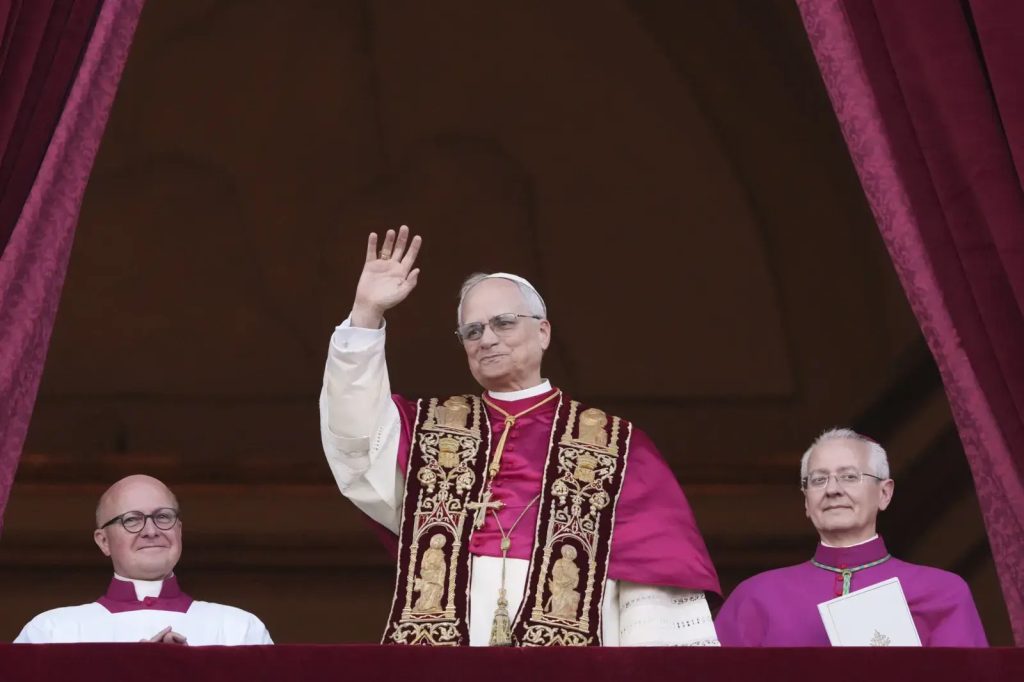
Cardinal Robert Prevost appears on the central loggia of St. Peter’s Basilica after being chosen the 267th pontiff of the Roman Catholic Church, choosing the name of Pope Leo XIV, at the Vatican, Thursday, May 8, 2025. (Andrew Medichini/Associated Press)

Survivors of sexual abuse by Catholic priests are calling on Pope Leo XIV to institute a zero-tolerance policy while demanding an investigation into his handling of prior misconduct allegations.

The Survivors Network of those Abused by Priests, which has 25,000 members worldwide, released a statement Thursday acknowledging the “gravity of the role” Cardinal Robert Prevost assumed as the first American pope in the Catholic Church’s 2,000-year history.

“With the title comes a grave reckoning,” the group, known as SNAP, said in a statement.

Hours earlier, prior to the 69-year-old Prevost being elected to lead roughly 1.4 billion Catholics around the world, SNAP released a 6-page open letter calling on the new pontiff to instill a “truly universal zero tolerance law for sexual abuse and cover-up” by clergy.

“Now that he’s the pope, we’re gravely concerned,” SNAP spokesperson Sarah Pearson told Newsweek. “These are serious allegations by three women and their complaints deserve to be investigated.”

Handling of Past Cases

Those allegations, according to Pearson, were primarily about Pope Leo XIV’s dealings with Father James Ray, a priest accused of abusing minors. Nearly a decade later, Ray’s ministry had been allowed to move to the Augustinians’ St. John Stone Friary in Chicago, despite the building being near a Catholic elementary school, the Chicago-Sun Times reported in 2021. Records obtained by the paper show that church officials approved the transfer, noting there was “no school in the immediate area.”

SNAP accused Prevost of “endanger[ing]” the safety of the children at the school by approving the transfer.

The Vatican has reportedly denied Prevost authorized Ray’s arrangements for the friary. Newsweek reached out to the Vatican’s press office for comment on SNAP’s letter but did not immediately receive a response.

In 2022, when Prevost served as bishop of Chiclayo in Peru, three victims reported alleged abuse to civil authorities following no movement in the canonical case they filed with the diocese. The victims claim Prevost failed to open an investigation and sent inadequate information to Rome, while the diocese allowed the priest to continue delivering mass, SNAP claims.

“He had a large amount of responsibility and oversight,” Pearson said of Prevost, who worked in Peru until 2023 when Pope Francis brought him to Rome.

The Vatican has reportedly denied any wrongdoing by Prevost in the Peruvian case. Pearson said SNAP wants a full investigation by the Vatican into both matters involving Prevost’s alleged faulty oversight.

“The only way this crisis is going to end is if the Vatican officials institute a zero-tolerance policy,” Pearson said. “And only Pope Leo XIV can do that.”

SNAP filed a complaint with Vatican officials against Prevost in March — before the death of Pope Francis — and have not heard back as of Thursday, Pearson said.

“As the Ordinary of the Diocese of Chiclayo, there is serious reason to believe that Cardinal Prevost did not follow the procedures established by the Holy See for carrying out investigations following reports of abuse,” reads the letter signed by SNAP officials, including Pearson, and viewed by Newsweek.

“There is evidence that the accused priests were not suspended from public ministry following a report of abuse and during the period of the purported preliminary investigation.”

SNAP claims testimony from the three alleged female victims was not gathered by church officials and that Prevost didn’t notify civil authorities of the allegations or offer psychological support or assistance.

The allegations by the women indicate the Diocese of Chiclayo didn’t investigate the abuse claims and misrepresented their testimony under Prevost’s leadership, ultimately preventing an accurate assessment of the case, SNAP claims.

“Thus, we request Vatican officials conduct a thorough investigation of the situation, with the results of the investigation being made public,” the group’s March 25 letter reads. “Should an independent special investigator be appointed to examine Prevost’s conduct, we request to be notified of this investigator’s identity and qualifications.”

SNAP is now calling on Pope Leo to take “decisive action” within his first 100 days as pontiff, including a zero-tolerance law pertaining to sexual abuse and a reparations fund supported by church assets.

“You can end the abuse crisis — the only question is, will you?” SNAP’s statement concluded.

Read story at Newsweek

New law requires clergy in Washington to report child abuse

Washington State Standard, Jerry Cornfield, May 2, 2025

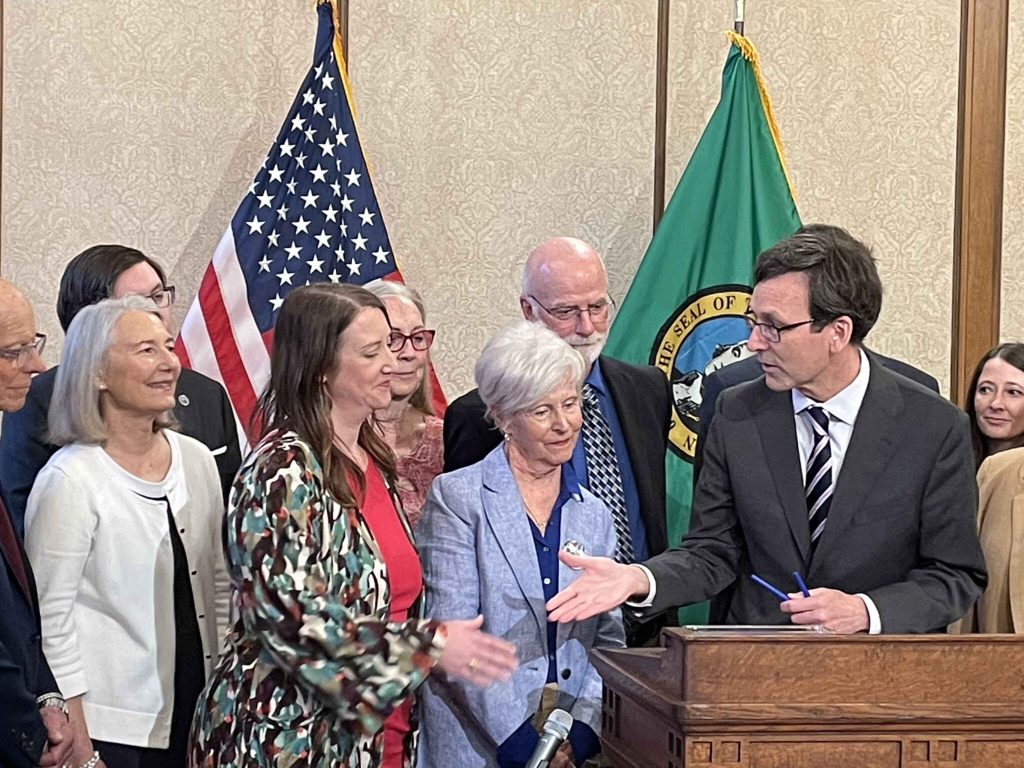
Gov. Bob Ferguson, at podium, goes to shake hands with state Sen. Noel Frame, D-Seattle, at the signing of a bill to make clergy mandatory reporters of child abuse and neglect, on May 2, 2025 in Olympia. At center is Mary Dispenza, a founding member of the Catholic Accountability Project. (Jerry Cornfield/Washington State Standard)

Religious leaders in Washington will be required to report child abuse or neglect, even when it is disclosed in confession, under a new law signed by Gov. Bob Ferguson on Friday.

“Protecting our kids, first, is the most important thing. This bill protects Washingtonians from abuse and harm,” Ferguson said, noting Washington is one of five states in which clergy are not currently mandated reporters.

It took Sen. Noel Frame, D-Seattle, three years to get the bill to the governor’s desk. Making sure disclosures during confidential conversations between a penitent and religious leader were not exempt was critical, she said.

“You never put somebody’s conscience above the protection of a child,” she said.

Senate Bill 5375 passed by margins of 64-31 in the House and 28-20 in the Senate. It takes effect July 27.

It adds clergy members to the state’s list of individuals legally required to report suspected child abuse to law enforcement or the Department of Children, Youth and Families.

Clergy would join school personnel, nurses, social service counselors, psychologists, and many others with a duty to report when they have “reasonable cause to believe that a child has suffered abuse or neglect.”

A “member of the clergy” is defined in the legislation to cover any regularly licensed, accredited, or ordained minister, priest, rabbi, imam, elder, or similarly positioned religious or spiritual leader.

While disclosures in confession or other religious rites where the clergy member is bound to confidentiality are not exempt, religious leaders will retain their privilege to not be compelled to testify in related court cases or criminal proceedings.

More than half the states make clergy mandatory reporters and most exempt what is heard in a confessional. Washington will join several states, including New Hampshire and West Virginia where such conversations are not exempt.

“It says the church is not above the law, especially when it comes to protecting children,” said Mary Dispenza, a founding member of the Catholic Accountability Project and member of the Survivors Network of those Abused by Priests. “We know children will be safer as a result of passing this law.”

Removing the confessional privilege proved the most divisive provision in legislative debates.

It’s the chief reason the Washington State Catholic Conference opposed the legislation. They said it would force priests to break the seal of confession, considered a sacred promise to never reveal any of the information disclosed.

Most Republican lawmakers were opposed to including the confessional, too. They argued in hearings and floor debates that abusers would do more harm because they would no longer be able to freely confide and seek forgiveness.

Keeping the confessional in the bill did not give Ferguson pause.

“Not for me,” he said. As a Catholic, “I’m very familiar with it. Been to confession, myself. I felt this was important legislation for protecting kids.”

Frame has said her push for the legislation began after reading an InvestigateWest account of a lawsuit alleging a Jehovah’s Witnesses congregation in Spokane covered up abuse of children by an elder.

Momentum grew as Catholic and Jehovah’s Witness survivors shared their stories with lawmakers and argued for including the confessions, she said.

“This is going to protect children in other religious communities, especially Jehovah’s Witnesses,” said Marino Hardin of Seattle, who worked to pass the law on behalf of abuse victims. “I believe that a lot more children will not fall through the cracks.”

Read story at The Washington State Standard

Cardinal accused of hiding priest sex abuse will help close Pope Francis’ casket

Cardinal Roger M. Mahony, who was accused of covering up cases of abuse as archbishop of Los Angeles, will have an official role in the ceremonies around Francis’ funeral.

The New York Times, Jonathan Wolfe, April 25, 2025

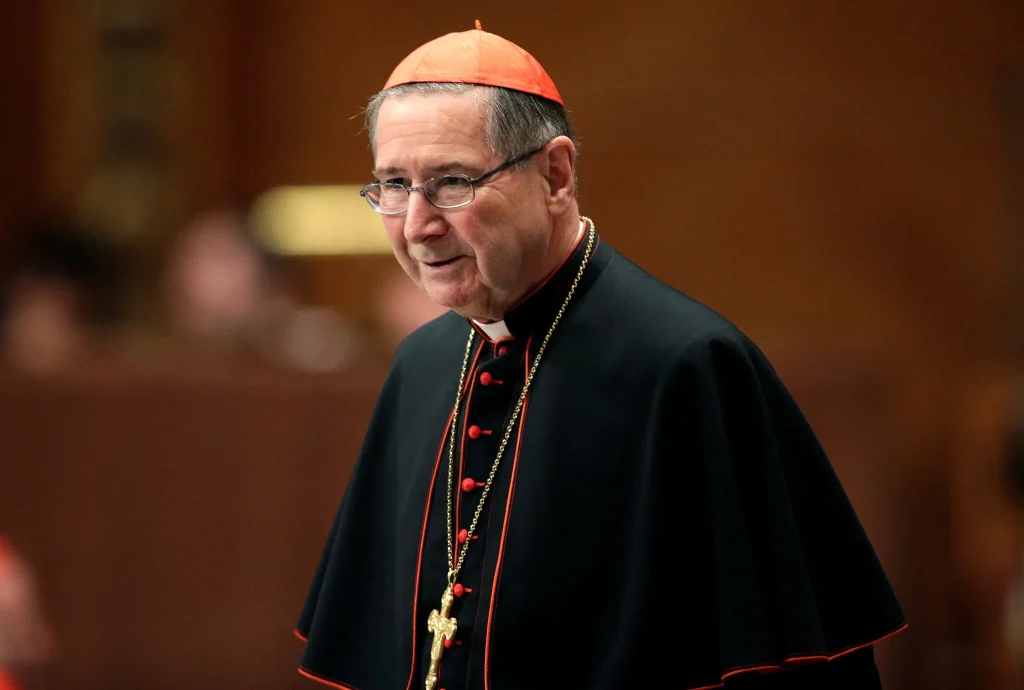
Cardinal Roger M. Mahony, the former archbishop of Los Angeles, covered up cases of sexual abuse by priests. (Max Rossi/Reuters)

An American cardinal who was accused of covering up cases of sexual abuse by priests and was later stripped of some duties, is set to play an official role in the ceremonies surrounding Pope Francis’ funeral.

Cardinal Roger M. Mahony, the former archbishop of Los Angeles, will participate in the closing of the pope’s casket at St. Peter’s Basilica on Friday evening and in his burial at the Papal Basilica of Santa Maria Maggiore on Saturday, according to Vatican announcements.

The cardinals taking part were chosen based on seniority, a spokesman for the Vatican, Matteo Bruni, said at a news briefing on Thursday.

Cardinal Mahony, 89, was the archbishop of Los Angeles from 1985 until his retirement from the Roman Catholic Church in 2011. In 2013, internal church personnel files released as part of a civil case revealed that Cardinal Mahony had played a role in covering up cases of sexual abuse by priests.

The documents show that Cardinal Mahony and others worked to protect abusive priests from punishment and withhold evidence of sexual abuse from law enforcement agencies. The Archdiocese of Los Angeles, the largest in the United States, also sent priests who had molested children out of state for treatment, in part because therapists in California were legally obligated to report evidence of child abuse to the police, according to the documents.

In 2007, the Los Angeles archdiocese agreed to pay $660 million to settle claims from more than 500 victims, the largest settlement for priest sexual abuse at the time. Last year, the church agreed to pay another $880 million to settle abuse claims from 1,353 people.

Advocates for abuse victims assailed the decision to allow Cardinal Mahony to take part in the papal funeral.

“By having Cardinal Mahony ceremonially close Pope Francis’s casket, the Catholic Church has chosen to let a known enabler of abuse perform one last act of cover-up,” Peter Isely, a founder of the Survivors Network of those Abused by Priests, said in a statement.

“Honoring him in this way makes it clear: Nothing has fundamentally changed under Francis’ papacy,” he added.

As archbishop, Cardinal Mahony was one of the most powerful men in the American church, known as a savvy politician, a relatively progressive prelate and a champion of Hispanic immigrants.

When the church files were released, Cardinal Mahony apologized to victims and said he had been naïve about the effectiveness of “treatments” for abusers and the impact of the crimes on those they had harmed.

“Given all of the storms that have surrounded me and the Archdiocese of Los Angeles recently, God’s grace finally helped me to understand,” he wrote on his personal blog after the files were released. “I am not being called to serve Jesus in humility. Rather, I am being called to something deeper — to be humiliated, disgraced, and rebuffed by many. I was not ready for this challenge.”

Cardinal Mahony’s successor, Archbishop José H. Gomez, disciplined him, a highly unusual move for the church at the time. The archdiocese said that Cardinal Mahony had been stripped of his official duties and would no longer speak publicly on behalf of the church, although he was still allowed to celebrate Mass.

Weeks after he was disciplined, when Pope Benedict XVI stepped down, Cardinal Mahony traveled to Rome to take part in the selection of the next pontiff, rebuffing calls from victims’ rights groups to recuse himself from the election. That conclave selected Francis, who as pope pledged “zero tolerance” for sexual abusers in the church and took measures to address the issue, although critics argued he did not go far enough.

In recent years, Cardinal Mahony has spoken out on political issues. He denounced President Trump’s plan for mass deportations of undocumented immigrants and criticized efforts within the church to deny communion to Catholic lawmakers who support abortion rights.

Adrian Alarcon, a spokesman for the archdiocese of Los Angeles, said in an email on Friday that Cardinal Mahony “has always been in good standing” and was “representing the Archdiocese of Los Angeles during this time of mourning for our Catholic community.”

“He is very much taking part in the general congregations, meetings, public masses, and other events that the cardinals are attending this week and in the coming days,” he said.

Cardinal Mahony cannot participate in the election for Francis’ successor, as prelates over the age of 80 are not eligible in the voting.

Read story at The New York Times

The abuse crisis is still roiling the Catholic Church

Pope Francis took steps to address abuse. But cases continue to emerge, especially in Africa and Asia, with the potential to upend future pontificates.

The Washington Post, Chico Harlan, April 24, 2025

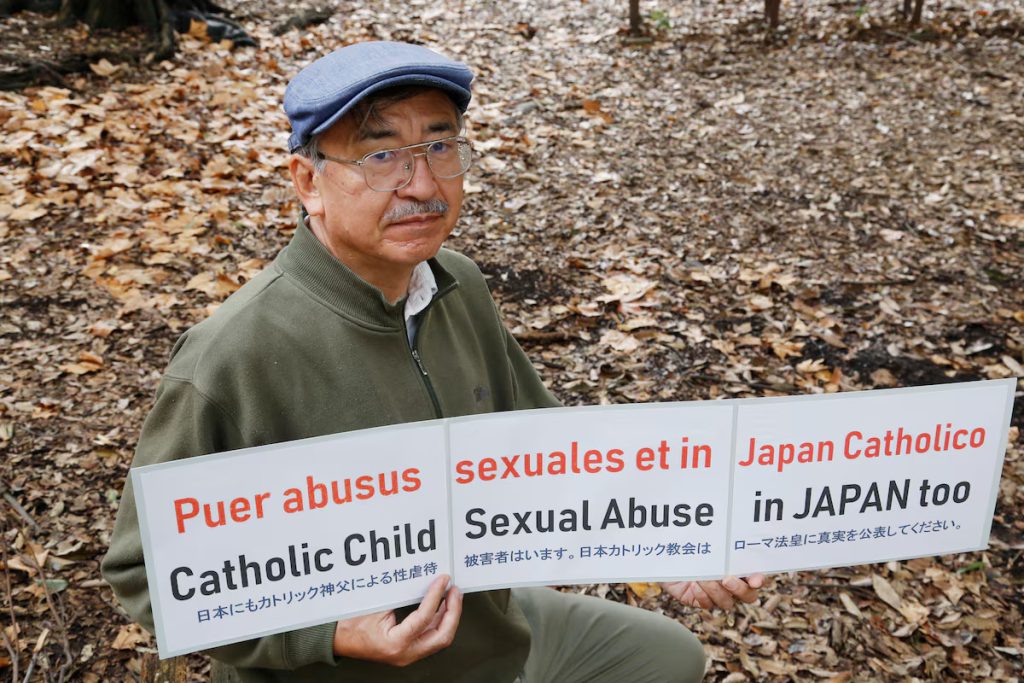
Katsumi Takenaka, among those who have gone public as survivors of Catholic clergy sexual abuse, protests Pope Francis’s visit to Japan in 2019. (Yuri Kageyama/AP)

VATICAN CITY — Pope Francis had once vowed to eradicate the “evil” of sexual abuse from the Roman Catholic Church. He called bishops to Rome for listening sessions. He drew up new guidelines for handling cases. 

Anti-abuse advocates commend Francis for grasping the systemic nature of the problem and meeting empathetically with victims. But they say he struggled to alter the church’s penchant for secrecy and its habit of acting forcefully only when under outside pressure.

What that means, in the aftermath of Francis’s death, is that the next pope will inherit a crisis that is still roiling the Catholic Church.

Even now, the Holy See is receiving a steady 800 cases per year from places such as Poland, Italy, Latin America and Asia, according to Archbishop Charles Scicluna, a member of the Vatican department that oversees the handling of abuse claims.

What that means, in the aftermath of Francis’s death, is that the next pope will inherit a crisis that is still roiling the Catholic Church.

Even now, the Holy See is receiving a steady 800 cases per year from places such as Poland, Italy, Latin America and Asia, according to Archbishop Charles Scicluna, a member of the Vatican department that oversees the handling of abuse claims.

The church, with its meticulous recordkeeping, was aware of rampant clerical sexual abuse well before it exploded into public view in the early 2000s. The first revelations emerged primarily in Western countries with strong prosecution services, independent media and advocacy groups. Now, the nature of the crisis is changing, and new regions are training a spotlight on crimes within the church.

“Now it is different places,” he said. “A culture of disclosure takes time to develop.”

One concern within the church is that any revelations could geographically broaden the church’s credibility problems, which have already driven an exodus of Mass-goers in Western Europe. The church is growing most quickly in Africa and parts of Asia, and even if reckonings don’t happen anytime soon, they lurk as potential risks during future pontificates. The lesson of the past three decades is that clerical abuse is widespread — so long as somebody is looking for it and victims have confidence to come forward.

Shaun Dougherty, an American who is the board president of the Survivors Network of Those Abused by Priests, or SNAP, said that abuse “is the single biggest issue in the church today.”

“They are still more willing to protect their church and themselves than the innocent,” he said.

The issue has altered the course of the last three pontificates.

Pope John Paul II, who led the church when the early evidence came to light, tended to view individual priests as the problem, paying less attention to crimes or cover-ups in the hierarchy. That oversight posthumously bruised his reputation, when it emerged that he had known about and overlooked sexual misconduct claims against Theodore McCarrick, a powerful American cardinal who was defrocked in 2019.

John Paul II’s successor, Pope Benedict XVI, moved more aggressively to punish priests and was the first pope to meet with clerical abuse survivors. But he also faced accusations — levied in a 1,900-page report released a year before his death — that he’d mishandled cases during an earlier point in his career. He expressed “profound shame” to abuse victims but admitted no wrongdoing.

Francis faced abuse-related challenges on many fronts. Conservatives, connecting the scourge to homosexuality in the priesthood, accused the pope of overlooking the root causes. Liberals, particularly in Germany, said the pope wasn’t going far enough in reforming the church. And several of Francis’s international trips, including to Belgium in September, were dominated by feelings of anger and betrayal stemming from the church’s response to abuse.

“It is shameful,” Francis said during that trip. “The church must be ashamed, ask for pardon and try to solve this situation.”

Some critics say that Francis, when not directly confronted with the issue, paid less attention to abuse in his final few years. During a landmark two-year church gathering that ended in 2024, known as a synod, many thorny church issues were discussed. But abuse was not a focus.

“Given that this was the existential crisis to the moral legitimacy to the church around the world, it was a stunning disappointment,” said Anne Barrett Doyle, the co-director of the watchdog group BishopAccountability.

‘All-out’ battle against abuse

Francis’s most relevant measures to counter abuse came at the midpoint of his pontificate, when global scandals brought pressure to an unprecedented level. In Chile, prosecutors were raiding church offices and accusing church leaders of a cover-up. In Australia, a cardinal was preparing to stand trial on numerous sex-related offenses. And in the United States, accusations about McCarrick were bubbling to the surface — as the pope promised a canonical trial.

Francis swiftly summoned bishops to Rome for a first-of-its-kind meeting to discuss abuse.

They listened to victims and aired proposals about improving oversight.

At the end of the four-day summit, the pope vowed an “all-out battle” against abuse.

He subsequently issued a sweeping new law that aimed to create a better system for fielding and investigating abuse claims. As part of that law, dioceses were required to set up offices for receiving complaints. Priests and nuns were obligated for the first time to report accusations of wrongdoing to religious authorities. And, perhaps most importantly, the measures added a new layer of oversight for bishops, who’d previously been answerable only to the pope — meaning they could operate without much scrutiny. Under the new system, bishops could essentially police their own ranks: If one bishop was accused of abuse or a cover-up, a prelate heading the largest regional dioceses could step in and lead an investigation.

The Vatican also made an example out of McCarrick. He was stripped of the rights of the priesthood, the most significant abuse-related punishment ever given to a onetime cardinal. His rise through the ranks was also subjected to an internal investigation, resulting in a 449-page report that unearthed papal decision-making in searing detail.

Lack of transparency

But the McCarrick report was a one-off.

And abuse experts, as well as Vatican officials, acknowledge that the church still does not operate with transparency or consistency.

A report issued in October by the pope’s abuse commission noted that not all dioceses have created the offices for receiving cases.

Sometimes the church investigates higher-ups according to its rules. But other cases are improvised, without explanation. Experts say it is hard to tell how well the system is working, because the church does not make public information about which bishops are punished and why.

“We need to work on a consistent application of adhering to the law,” said Hans Zollner, a German priest who helped organize Francis’s abuse summit, and who specializes in safeguarding. “This is the main challenge for the church” when it comes to abuse.

When one of Francis’s top-ranking cardinals, Canadian Marc Ouellet, faced accusations of inappropriate touching, the Vatican delegated the investigation to a priest who already knew Ouellet well. When a Nobel-winning bishop from East Timor, Carlos Ximenes Belo, was accused of abusing impoverished children, the Vatican disciplined him. But the restrictions — including a ban on contact with minors — were kept secret until a Dutch news outlet looked into the case.

Victims commonly say they struggle to obtain information about any discipline meted out against their alleged abusers.

Scicluna called that a “fair” criticism.

“If you look at the record of Pope Francis, we are in a better place when it comes to laws and structures,” Scicluna said. “One thing is having laws and structures. Another is how they operate on the ground.”

Read story at the Washington Post

Survivors of clergy sex abuse say Pope Francis’ response to crisis was insufficient

WGBH, Craig LeMoult, April 21, 2025

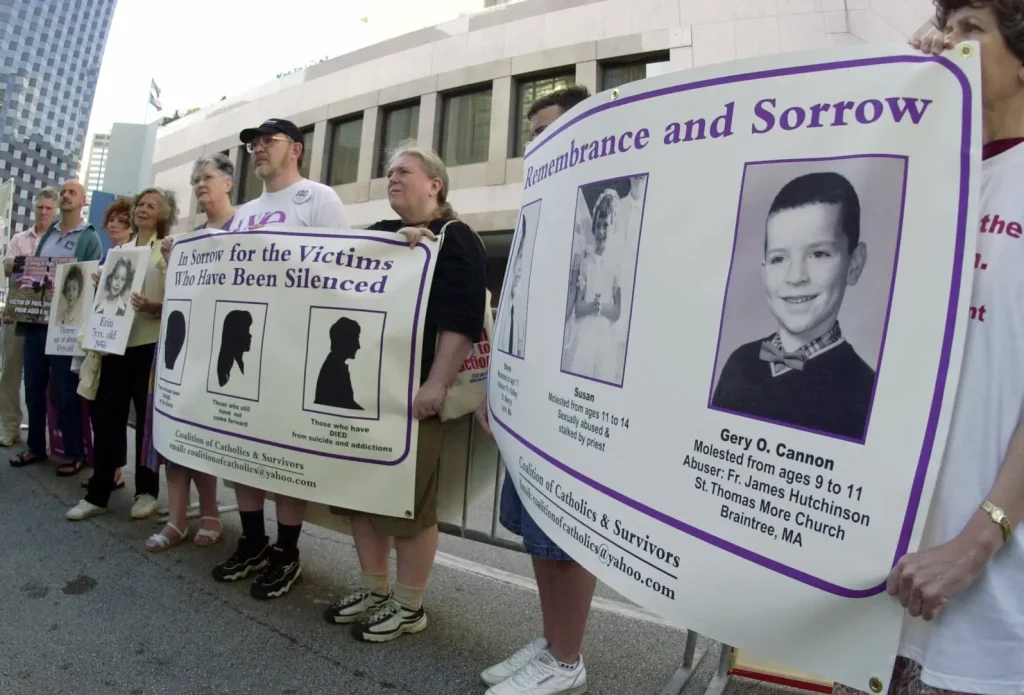
Demonstrators with the Coalition of Catholics and Survivors hold posters of children who have allegedly been sexually abused by Catholic priests, across the street from where the U.S. Conference of Catholic Bishops are meeting in Dallas, Friday, June 14. 2002. (Charlie Riedel/AP)

While the airwaves have been flooded since Pope Francis’ death on Monday with praise for a transformative and humble leader, the pope’s legacy is a more complicated and troubled one for many focused on the issue of clergy sex abuse.

“My heart goes out to all of those who are deeply affected by [the passing of Pope Francis],” said Myra Russell, a Boston resident.

But for Russell, a survivor of clergy sexual abuse between the ages of 4 and 15 when she lived in Albany, it was hard to hear Pope Francis talking about “world peace” while knowing the inner lives of abuse survivors are anything but peaceful.

“As a survivor, first of all, I can tell you survivors are having a lot of feelings today, lots going on inside them,” said Peter Isely, one of the founders of SNAP, the Survivors Network of those Abused by Priests.

“This is the third pope in modern times since this issue has become public … thanks to survivors decades ago,” Isely said. “Each one of those popes, including Francis, covered up sex crimes before they became pope. I’m not speculating here. This is demonstrable and proven. Unfortunately, we only found out about that after they became pope.”

That’s why SNAP launched “Conclave Watch,” a database tracking the records of Catholic Cardinals in handling abuse cases, he said.

“We don’t need another pope that’s covered up sex crimes,” he said. “I don’t know how morally the church can survive really if we drag a fourth papacy into this.”

“Francis needed to complete the work that started in Boston. … And he didn’t do that.”

The crisis came to light nationally in 2002, thanks to abuse survivors in the Boston area who shared their stories with the Boston Globe’s Spotlight team.

“It was because the force of what came out in Boston that made the American bishops make a change in church law, which made it prohibited that any priest or cleric that has been known at any time to have sexually abused a child had to be permanently removed from ministry and could never function or practice or present himself as a priest again,” Isely said.

But as pope, Francis never enacted a global change in canon law that prohibits priests from serving in ministry when it’s been proven they are guilty of sexual abuse.

“Francis needed to complete the work that started in Boston. He needed to complete it and make it global, what began in Boston,” Isely said. “And he didn’t do that.”

Father Michael C. McCarthy, SJ, dean of the Boston College Clough School of Theology and Ministry, agreed that Francis should have done more.

“I think probably he himself would say his approach was insufficient,” McCarthy said. “I think it was probably a step forward from his predecessors. But I do think that this is something that the Church continues to wrestle with, as indeed larger society in so many other ways too.”

Pope Francis’ understanding of and response to the crisis evolved significantly over the years, said Stephen Pope, professor of theology at Boston College.

“The clergy sex abuse problem is sort of a tortured issue for Pope Francis in that he was appalled by the behavior of priests, but also by the bishops that covered up the abuse,” Pope said. “And he really wanted to insist on transparency and accountability. He had a great learning curve on this.”

For example, Francis initially refused to believe the accounts of abuse survivors in Chile and accused them of slander in 2018.

“But when there was huge outcry, he went back to Rome and sent a delegate to investigate the accusations of abuse and he discovered that they were indeed true. The result was he went through a process of repentance,” Pope said.

“There’s a tendency with the hierarchy to think these are a few rotten apples. And the pope came to believe that there was a systematic problem within the church and not just in Chile or the U.S. Or Germany, elsewhere, but throughout the world,” Pope said.

Francis founded the first Pontifical Council for the investigation of sex abuse in the church, which was headed by Cardinal Seán Patrick O’Malley of Boston.

“Some of the members were frustrated that their work got delayed and thwarted to some extent by the bureaucracy of the Vatican,” Pope said. “And were frustrated that the pope couldn’t take control of that Vatican bureaucracy more effectively. The general feeling is that he meant sincerely to change not just the institutional reporting mandate and insisting on accountability for anyone who’s accused of sex abuse, credibly accused, but also to change the culture of the church.”

Asked on Monday about Francis’ record on clergy sex abuse crisis, Archbishop Richard Henning of the Archdiocese of Boston spoke generally about the example the pope set.

“It’s hard to heal the damage that is done by that kind of transgression of human dignity,” Archbishop Henning said.

“So the Holy Father, I think, has a heart for people who are suffering, and he gives us his own witness, the way to respond, which is that we walk with people, we accompany people, right?” Henning said, still speaking of Pope Francis in the present tense.

“So he uses that word throughout his writings, ‘accompaniment.’ He calls us to, without judgment, just be with people, listen to them, try to understand their experience, allow them to express their heart and their suffering and their story,” Henning continued. “And I think … that’s a good witness he gives us and I certainly will try to live that in my own ministry here.”

Now, as Cardinals choose a new pope, abuse survivor Myra Russell said she’s feeling a sense of uncertainty.

“I’m going to try and be optimistic about the future,” she said. “But it’s scary when people I talk to say they don’t really even know that this [abuse] still happens.”

Read story at WGBH News

Abuse victim advocates hold press conference outside campus gates, announce complaint against university leader

The Setonian, Jacqueline Litowinsky and Sofia Kasbo, April 17, 2025

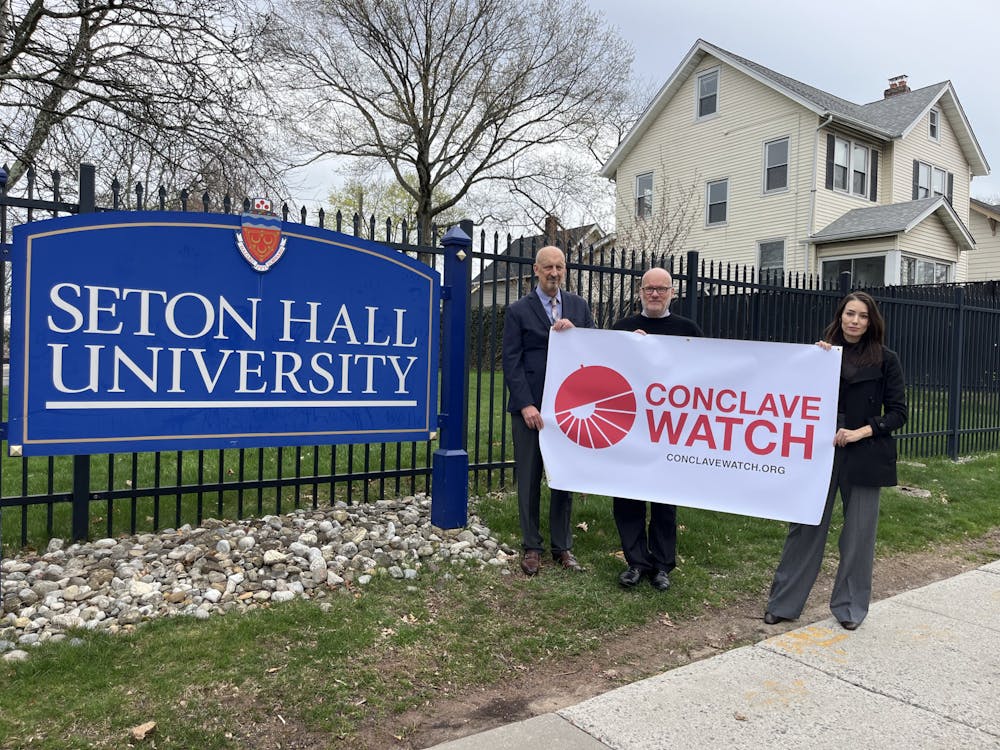
SNAP/Conclave Watch representatives outside campus (Sofia Kasbo/The Setonian)

The Survivors Network of those Abused by Priests (SNAP) held a press conference on Tuesday in front of Seton Hall’s Ward Gate to announce the filing of a formal complaint against Cardinal Joseph Tobin, the Archbishop of Newark and the president of SHU’s Board of Regents and chair of the Board of Trustees, urging a Vatican investigation.

The purpose of the press conference was to “deliver a critical announcement concerning the role of the U.S. Catholic cardinals in the next papal conclave,” according to a SNAP press release.

SNAP announced they have filed formal complaints against several U.S. cardinals, including some who lead Vatican dicasteries responsible for investigating abuse. One of the cardinals named in the complaints is Tobin.

With Tobin holding powerful positions at SHU, part of the reasoning behind his inclusion in the complaint stems from the controversy surrounding university President Msgr. Joseph Reilly.

Reilly was named the university’s 22nd president in April 2024 in a selection process led by the Board of Regents and Board of Trustees, according to SHU’s by-laws. As the president of SHU’s Board of Regents and chair of the Board of Trustees, Tobin formed the search and screen committee that appointed Reilly president. This came after a 2019 report by the law firm Latham & Watkins allegedly found that Reilly was “aware of sexual harassment allegations involving seminarians and did not report such allegations to SHU officials, in violation of the university’s Title IX policies.”

In December 2024, Politico revealed that Reilly allegedly knew about claims of sex abuse at SHU at the hands of now-defrocked Theodore McCarrick. McCarrick was the archbishop of Newark from 1986 to 2000. He died on April 3 at the age of 94.

On March 18, New Jersey Superior Court judge Avion Benjamin ordered SHU to hand over the Latham report; however, it is unclear when Benjamin will receive it and other relevant documents.

The SNAP press conference was held at the Ward Place Gate around 11 a.m. on April 15 and was led by three SNAP representatives: board president Shaun Dougherty, founding member and chair of the Global Policy Working Group Peter Isely, and media and communications team member Sarah Pearson.

“We chose to announce seven new complaints on U.S. cardinals at Seton Hall because of the ongoing catastrophe that only continues because Cardinal Tobin refuses to do the right thing: come clean about what happened, release the report from the 2019 investigation, and make the necessary corrections to ensure what happened in the past can never happen again,” Pearson said.

Pearson also criticized the university’s selection of Reilly as president after a Board of Regents task force, according to Politico, said he should not hold any leadership position on campus.

“[This] is utterly disrespectful to survivors of abuse, and it sends a message to current students that violating Title IX regulations is not a dealbreaker for campus leadership,” Pearson said.

Maria Margiotta, executive director of communications for the Archdiocese of Newark, commented on SNAP’s complaint, referencing a “comprehensive third-party review of the facts” that Cardinal Tobin announced in February.

“Cardinal Tobin commissioned the Ropes & Gray law firm to conduct a third-party review of the facts from the 2019 Latham report about whether or not Monsignor Reilly had any relevant knowledge of former Archbishop McCarrick’s behavior and communicated such information to any and all appropriate personnel at Seton Hall and the Archdiocese of Newark, and if so, by what means and by whom,” Margiotta said.

Margiotta added that Tobin has pledged to publicly release the findings of this review.

According to SNAP’s complaint, Tobin’s actions are an abuse of church power that hurt vulnerable people and caused scandal, which is a violation covered by canon 1378 in Code of Canon Law.

Dougherty, Isely, and Pearson accused Tobin of obstructing both civil and canonical investigations in the Archdiocese of Newark and at SHU (which is a diocesan university) and called for a transparent, Vatican-led inquiry.

Specifically, the complaint said that in 2018, a journalist wrote that Cardinal Tobin told him after taking over as archbishop in Newark that he heard “rumors” about McCarrick and a beach house where he had abused seminarians but never bothered to check them out, saying the story was too “incredulous” to believe. The complaint also claims that the archdiocese instructed Reilly not to cooperate with SHU’s investigation into McCarrick’s conduct on campus.

SNAP issued their complaint on Monday with the Vatican in light of Pope Francis’s Vos estis lux mundi declaration, which allows any person to submit a report concerning clergy sexual misconduct allegations.

The complaint requests that Vatican officials carry out a full investigation and release the findings publicly.

The complaint also references The Setonian’s March article “Legal battle over sex-abuse report intensifies.”

These filings follow last month’s announcement of the Conclave Watch initiative in Rome, which is a “global, survivor-led initiative” launched by SNAP.

According to their website, Conclave Watch “calls on the next conclave to select a pope who has not covered up abuse and who will commit—on the very first day of his papacy—to enacting a binding, universal zero tolerance law.”

Pearson told News 12 New Jersey about SNAP’s mission before the election of the next pope.

“We’re trying to give survivors around the world and in the United States a platform for people to speak out…so we can have these conversations now,” Pearson said. “So we can talk about this before the next pope is elected—before we find out after the fact that that person may have a history of having covered up abuse.”

Tobin is currently scheduled to lead an immigration panel at SHU on April 24, serving as the keynote speaker and mass celebrant.

Read story at The Setonian