Former New Orleans Catholic priest exploited family deaths to abuse disabled boy, police allege

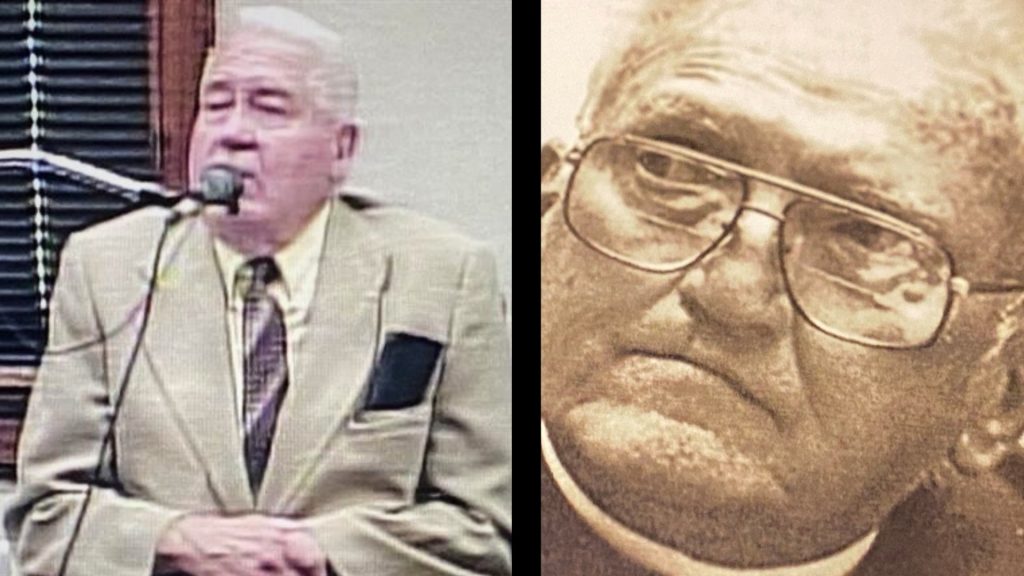
NEW ORLEANS — A man working as a Roman Catholic priest in New Orleans positioned himself as a mentor to a young disabled boy grieving two family deaths – and then exploited the proximity to abuse him for years, police allege.

Those details are contained in criminal court records generated by the arrest of Mark Francis Ford in Indiana in September as well as his subsequent transfer to the Orleans Justice Center jail, a process which was completed late on Tuesday.

Ford, 64, made an initial appearance in Criminal District Court on Wednesday as he became the latest figure to come under scrutiny during the New Orleans Catholic church’s long-standing clergy molestation scandal.

A magistrate commissioner temporarily ordered Ford held without bail.

Ford is one of several men who have worked as Catholic clergymen in New Orleans to have been arrested by authorities in connection with child sexual abuse allegations after the city’s archdiocese filed for federal bankruptcy protection in 2020. That bankruptcy filing was designed to limit its financial liability with respect to hundreds of claims of clergy molestation, mostly victimizing children, over several decades.

The New Orleans archdiocese has agreed to pay at least $230 million to collectively settle with abuse survivors whose claims are tied up in the bankruptcy. Those survivors have until Oct. 29 to vote on whether or not to approve the settlement.

According to a sworn statement from one of the city’s sex crimes detectives, the accuser at the center of Ford’s case reported being about 10 when he met the man known to him as “Father Mark” in 2004 through a program for disabled youth named God’s Special Children, which Ford co-founded.

The boy was mourning the deaths of his grandmother and father when Ford – who was a Catholic priest from 1992 to 2007 – grew close to him, making it a point to visit the child at home to play video games with him and give him guitar lessons, the police statement said.

Then, police alleged, Ford began displaying pornography to the boy, who has a degenerative spinal condition which occasionally requires him to use a wheelchair and is on the autism spectrum. Ford was said to have ignored the boy when he expressed discomfort with the explicit content and allegedly instructed the child to keep it secret from his mother.

On several occasions after that, Ford allegedly sexually attacked the boy at the child’s home, telling him his family would not believe him if he ever spoke out.

An aunt of the boy walked in shortly after one of the attacks, prompting the child to try to signal distress through body language and eye contact – though the relative did not realize anything was wrong, according to police.

The accuser, legally ruled to be a minor despite having reached the age of majority, came forward to police in November 2024. He subsequently underwent two forensic interviews, and on Sept. 9, police obtained a warrant to arrest Ford on four counts of first-degree rape.

The warrant also accused Ford of two counts each of sexual battery, indecent behavior with a juvenile and second-degree kidnapping. The offenses Ford is alleged to have committed in the case occurred between 2004 and 2014, the warrant for his arrest said.

On Sept. 25, police arrested Ford in Portage, Indiana, where he was residing, holding him without bail pending his extradition to New Orleans. Ford waived his right to challenge the extradition at an Oct. 1 court hearing. And he was booked into New Orleans’s lockup late on Tuesday.

Ford in court on Wednesday was ordered held without bail until at least another hearing that was tentatively set for Friday.

He would face mandatory life imprisonment if eventually convicted as the accused.

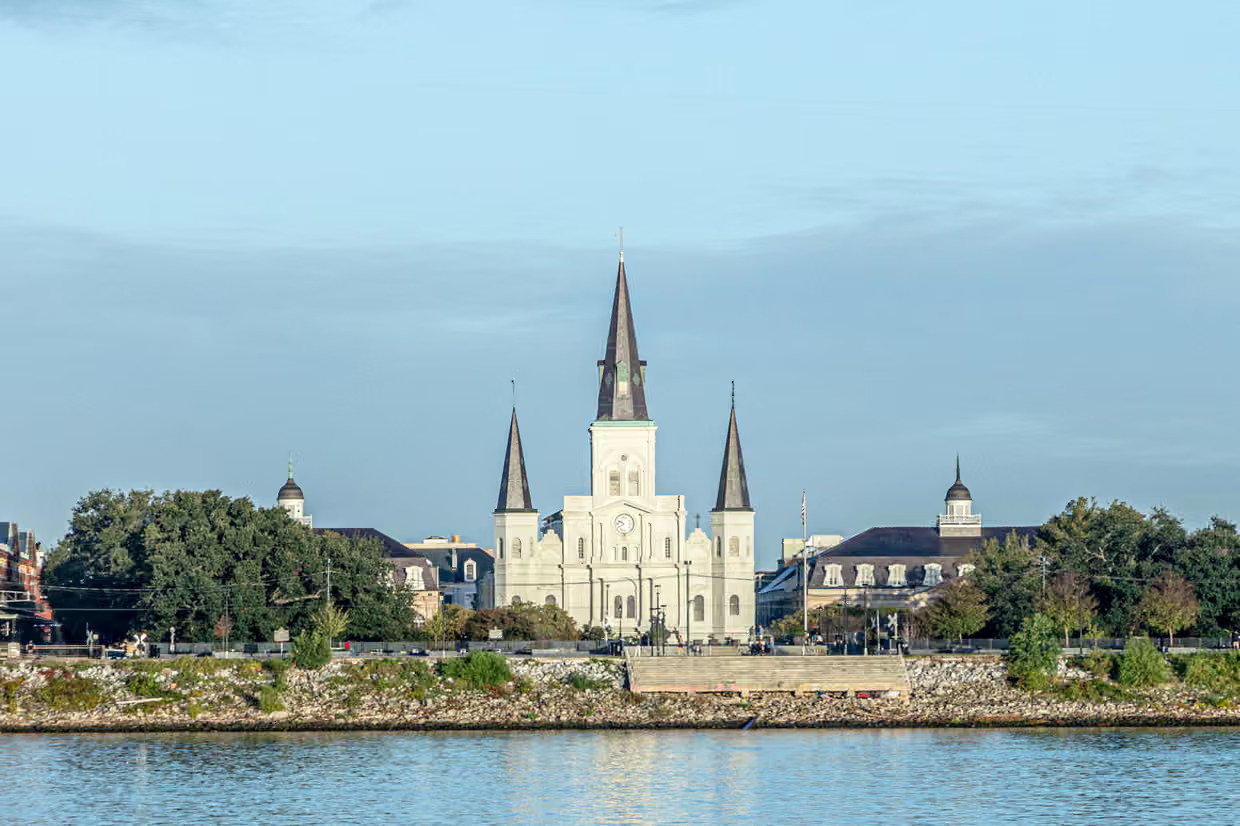
Ford belonged to the Catholic religious order known as the Vincentians, and he ministered at various churches within the archdiocese of New Orleans as well as the dioceses of Dallas and Gallup, New Mexico, during his clerical career. He helped launch God’s Special Children while at St Joseph church on Tulane Avenue in New Orleans, which the Vincentians have run since 1858.

The Vincentians say Ford eventually successfully asked the Vatican to laicize him, or remove him from the Catholic priesthood. An online profile of Ford said he worked for Louisiana’s government beginning in 2006 as assistant director of disability affairs, and later, in a separate role, aided efforts by the state’s Native tribes to recover from hurricanes.

More recently, Ford was reported to have joined the US hunger relief non-profit Feeding America with positions in Phoenix and Chicago. And he was listed as a board member of the American Indian Center in Chicago.

The church watchdog group BishopAccountability.org says Ford was not listed among active clergy members in the 1994, 1999, 2002 and 2003 editions of the Official Catholic Directory (OCD) – disappearances that often correlate with “problems in ministry that are not being managed in a transparent way, and/or periods during which the priest has been sent to a treatment center”.

Only the earliest of those interruptions in ministry was ostensibly explained in the news media, as BishopAccountability.org noted.

The Dallas Morning News reported in 1997 that Ford had previously entered a program in Albuquerque, New Mexico, run by the Servants of the Paraclete.

The reason provided was that Ford had problems managing money while working at two churches in Arizona for the diocese of Gallup.

The Servants of the Paraclete’s program at the time was arguably better known for treating other issues – ranging from substance abuse to child sexual abuse.

As a gesture of transparency and reconciliation amid the fallout of the worldwide Catholic church’s clergy molestation scandal, the Vincentians, the New Orleans archdiocese and the dioceses of Gallup and Dallas have published lists of clergymen with credible allegations of child molestation.

Ford had not immediately been added to those lists after his arrest in Portage, according to information on BishopAccountability.org.
Ex-priest indicted for allegedly raping disabled child while ministering in New Orleans

A man accused of molesting a disabled boy whom he met while working as a Roman Catholic priest in New Orleans has been indicted on child rape charges, according to authorities.

Grand jurors seated in New Orleans’ state criminal courthouse on Thursday handed up a nine-count indictment against Mark Francis Ford, nearly five months after authorities arrested him and jailed him without bail. The document charges Ford, 64, with aggravated rape of a child; raping a person suffering from a physical disability preventing resistance; two counts of molesting a juvenile; another three of indecent behavior with a minor; and kidnapping.

Ford is only the latest figure to come under authorities’ scrutiny during the longstanding clergy molestation scandal within the New Orleans Catholic church. Prosecutors allege that he committed the offenses cited in the indictment between 2006 and 2008, victimizing a boy who was between the ages of 12 and 14.

He would face mandatory life imprisonment if convicted as accused in the indictment, through which the office of the New Orleans district attorney, Jason Williams, filed formal charges against Ford in connection with his earlier arrest.

Ford’s attorney, Ralph Whalen, did not immediately comment on Thursday. He later pleaded not guilty to all charges.

Court records generated by Ford’s arrest allege that he positioned himself as a mentor to the victim in the case while the boy grieved two family deaths. Ford then allegedly exploited that proximity to abuse the boy, whom he met through a church program for youth who are disabled.

The name of that program was God’s Special Children, and it was co-founded by Ford.

As police tell it in a sworn statement filed in court, the boy was mourning his grandmother’s and father’s deaths when Ford, who was a Catholic priest from 1992 to 2007, grew close to him, visited him at home to play video games with him and gave him guitar lessons.

Then, police alleged, Ford began showing pornography to the boy, who is on the autism spectrum and has a degenerative spinal condition, which occasionally requires him to use a wheelchair. Ford allegedly ignored the boy’s pleas when the child expressed discomfort with the explicit content, eventually sexually attacked the boy on several occasions and told him his family would never believe him if he reported the abuse.

Legally ruled to still be a minor despite having reached the age of majority, the victim came forward to police in November 2024, court documents say. He subsequently underwent two forensic interviews, and police obtained a warrant to arrest Ford in early September.

Authorities arrested Ford in Portage, Indiana, where he was residing, later that month. He was transferred to New Orleans’ jail in October and ordered detained there without bail pending the outcome of the case.

Williams’s office has previously said the case against Ford is “deeply serious and disturbing”.

“He is accused of using his position to commit violent and reprehensible acts against a child with a disability,” a prior statement from Williams’s office said. “These allegations represent an unacceptable breach of trust and a level of vulnerability that should never be taken advantage of.”

Ford is among several men who have worked as Catholic clergymen in New Orleans to have been arrested by authorities in connection with child sexual abuse allegations, both before and after the city’s archdiocese filed for federal bankruptcy protection in 2020.

The archdiocese and its insurers in early December agreed to pay $305m collectively to settle with abuse survivors whose claims were ensnared in the bankruptcy case. Almost a year to the day before that agreement, the retired New Orleans Catholic priest Lawrence Hecker pleaded guilty to decades-old rape and kidnapping charges and received a mandatory life sentence. He died in prison at age 93, soon thereafter.

Shortly after Ford’s indictment, in an unrelated case, the archdiocesan all-girls high school at New Orleans’s the Academy of the Sacred Heart, announced that a lay biology teacher there had been arrested under a state law prohibiting sexual conduct between educators and students.

The teacher, a 29-year-old woman named Teddi Page, had been fired in addition to being arrested, according to the school. The school said Page had come under investigation when it became “aware of a concern earlier [in the] week about [her] interactions with one of our students”.

Ford belonged to the Catholic religious order known as the Vincentians, and he was assigned to various churches within the archdiocese of New Orleans as well as the dioceses of Dallas and Gallup, New Mexico, during his clerical career. He helped found God’s Special Children while at New Orleans’ St Joseph church, which the Vincentians have run since 1858.

The Vincentians say Ford eventually successfully asked the Vatican to remove him from the Catholic priesthood. An online profile of Ford said he worked for Louisiana’s government beginning in 2006 as assistant director of disability affairs, and later, in a separate role, aided efforts by the state’s Native tribes to recover from hurricanes.

More recently, Ford was reported to have joined the US hunger relief non-profit Feeding America with positions in Phoenix and Chicago. And he was listed as a board member of the American Indian Center in Chicago.

The church watchdog group BishopAccountability.org has previously said the 1994, 1999, 2002 and 2003 editions of the Official Catholic Directory failed to list Ford among active clergy members. Such disappearances can often signal “problems in ministry that are not being managed in a transparent way, and/or periods during which the priest has been sent to a treatment center”, the group said.

Yet, as the website noted, only the earliest of those interruptions in ministry was publicly explained. The Dallas Morning News reported in 1997 that Ford had entered a program in New Mexico to be treated for problems managing money while working at two churches in Arizona for the Gallup diocese.

 In the US, call or text the Childhelp abuse hotline on 800-422-4453 or visit their website for more resources and to report child abuse or DM for help. For adult survivors of child abuse, help is available at ascasupport.org. In the UK, the NSPCC offers support to children on 0800 1111, and adults concerned about a child on 0808 800 5000. The National Association for People Abused in Childhood (Napac) offers support for adult survivors on 0808 801 0331. In Australia, children, young adults, parents and teachers can contact the Kids Helpline on 1800 55 1800, or Bravehearts on 1800 272 831, and adult survivors can contact Blue Knot Foundation on 1300 657 380. Other sources of help can be found at Child Helplines International

‘Who we honor matters’ | Claudia Vercellotti has spent decades fighting for accountability

 Brian Dugger

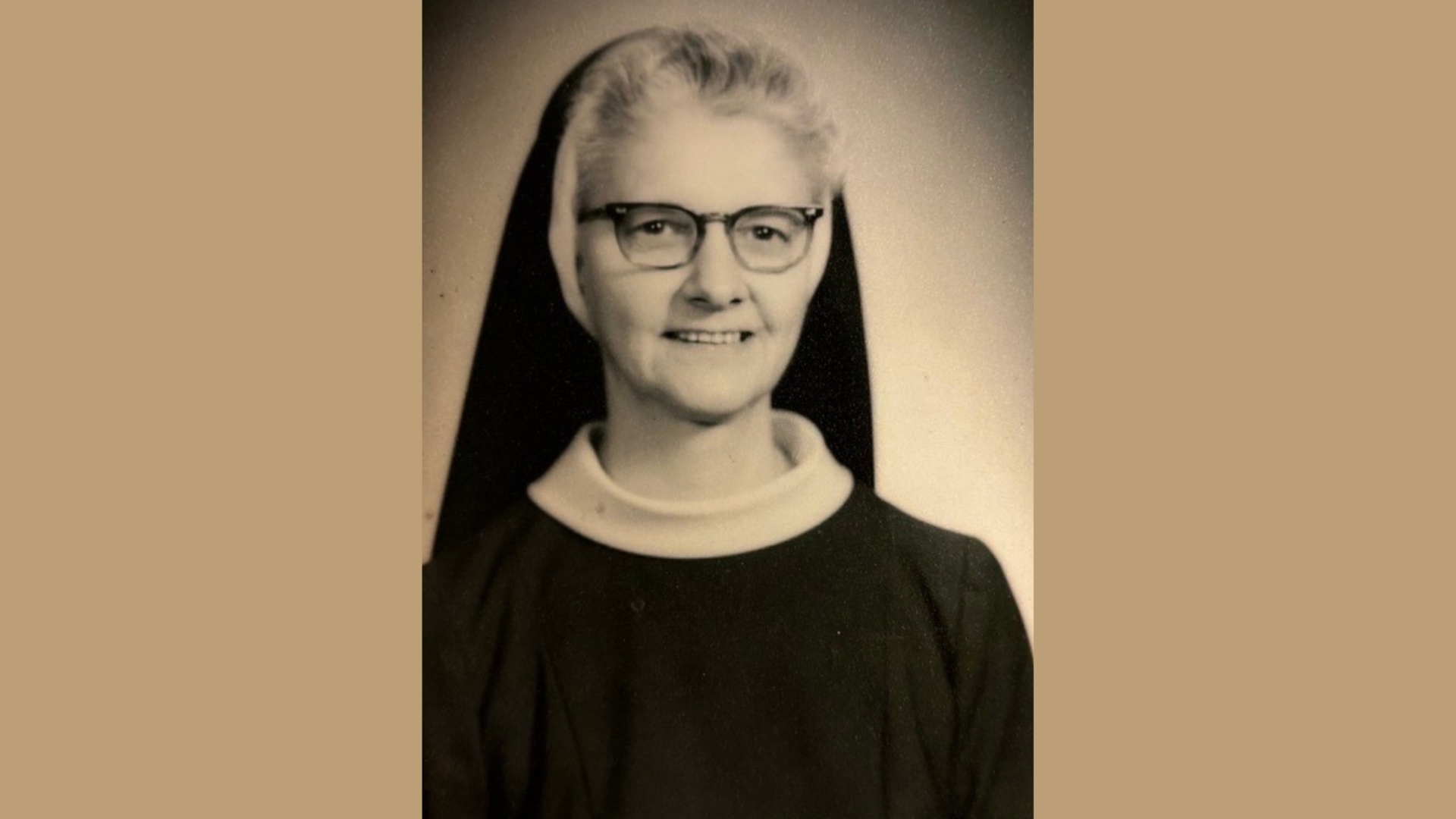
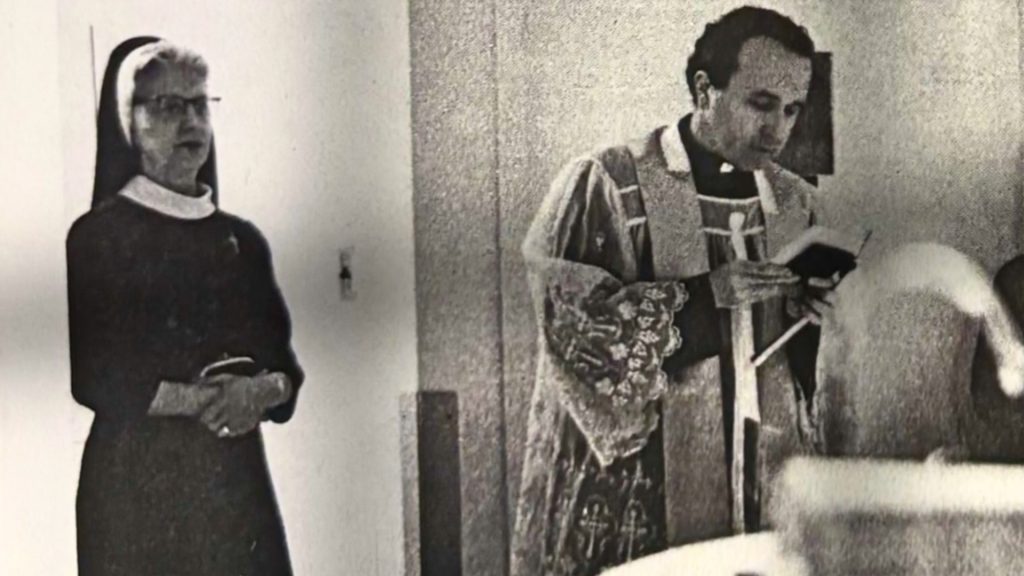
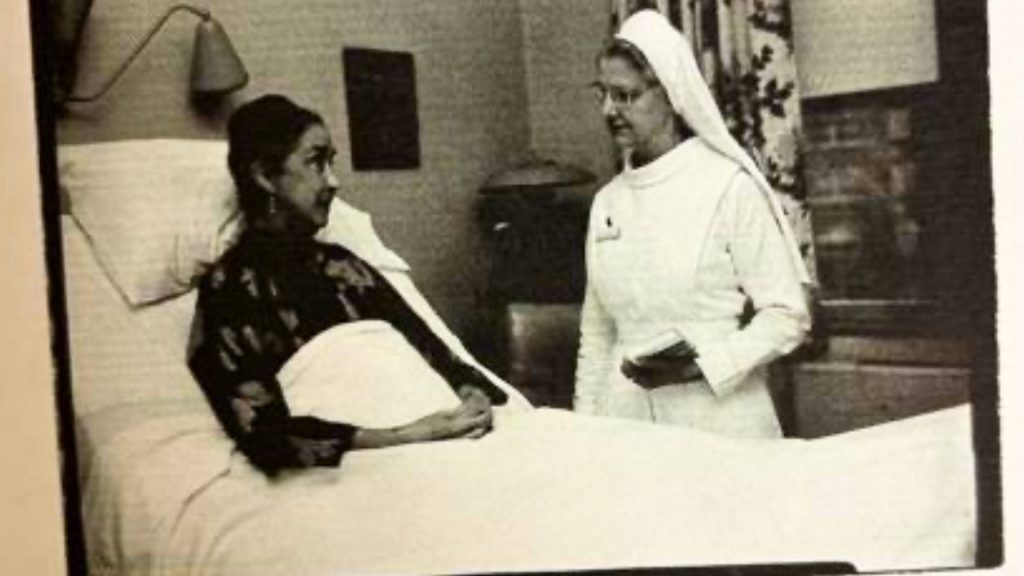
Decades after the killing of Sister Margaret Ann Pahl, the Ohio SNAP founder believes the Catholic Church continues to fail one of its most devoted servants.

Claudia Vercellotti pops out of an elevator inside Toledo’s Oliver House, lugging an oversized bag of poster boards.

She founded the Ohio chapter of SNAP – Survivors Network of those Abused by Priests – in 2002, giving her plenty of time to add to her collection of boards, which contain images of Catholic Church-related documents.

But she did not initially come to the Father Gerald Robinson case through documents. She came to it as a child riding through Toledo in the 1980s, looking out a car window at Mercy Hospital and knowing that something terrible had happened there.

“When I was a kid in the 80s, I attended the Community of the Risen Christ Church,” she says. “We were the hippie church on wheels.”

On the way to church, she would pass Mercy Hospital, the site of Sister Margaret Ann Pahl’s murder.

“It was a horrible, horrible crime at that time. I mean, who murders a Catholic nun?”

Years later, Vercellotti became one of the most persistent public critics of the Toledo Catholic Diocese. On this afternoon, her criticism is aimed at the church’s handling of the murder of one of its most loyal servants.

“Sister Margaret Ann Pahl devoted her life to Christ. Those are the vows that she took. That’s all she did. She gave her life to Jesus and was murdered in a very violent, graphic, horrific way on Holy Saturday,” Vercellotti says.

She isn’t shy with her opinions.

“Shamefully so,” she says when asked whether Catholic influence played a role in Father Robinson not being charged in 1980. “Father Robinson was given a pass.”

More than 45 years after the crime, 20 years after Robinson’s conviction and nearly 12 years since his death, Vercellotti is still bothered by how the investigation was handled – first in 1980, then in 2004.

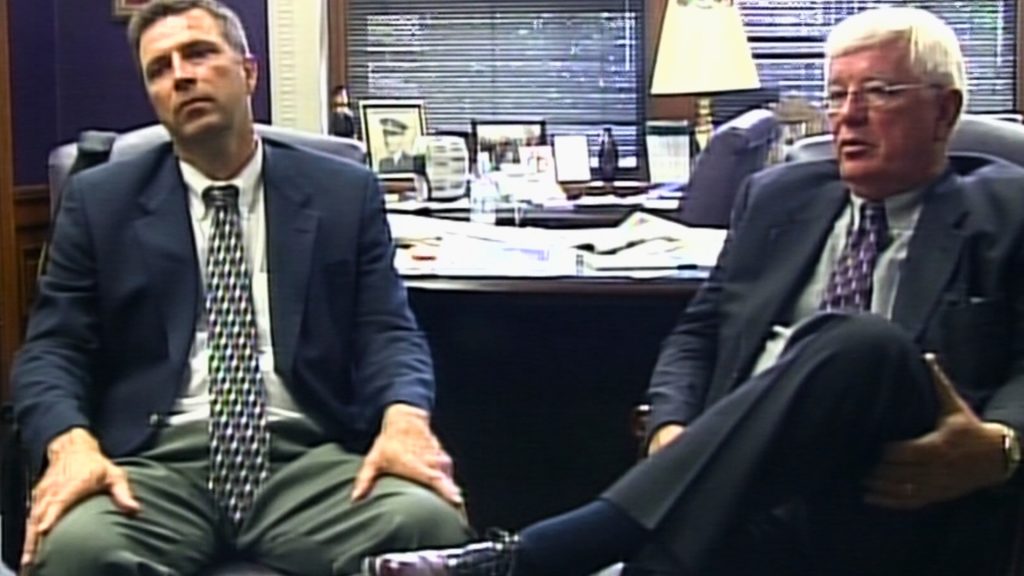
In 1980, Robinson was walked out of an interrogation room by Monsignor Jerome Schmidt and Deputy Police Chief Ray Vetter, despite what Vercellotti describes as a near-unanimous belief among investigators that Robinson was the likely perpetrator. She sees the early handling of the case as both an outrage and a warning.

“They have the prime suspect within three weeks,” she says. “The whole investigation, which was touted as Toledo’s most notorious murder investigation, is wrapped up in three weeks flat. If that is how you investigate the most notorious murder, what real hope does anyone else have?”

That belief hardened over the years as she worked clergy abuse cases and watched the diocese, in her view, respond with the same instincts over and over again. She does not treat the Robinson case as separate from that history. She links it directly to it.

“There was well-documented collusion between the police and Toledo Catholic diocese for making these cases go away,” she says.

Priests, she argues, were quietly moved, victims were blamed, and accusations were managed instead of exposed.

“They just keep covering up, covering up, covering up.”

When a woman came before the diocesan review board in the early 2000s with allegations that included Father Robinson, Vercellotti says she saw the same machinery spring back to life. The bishops had promised openness, honesty and transparency in the wake of the Boston Globe’s reporting on clergy abuse and the Dallas Charter – a set of procedures adopted by the United States Conference of Catholic Bishops in June 2002 for addressing allegations of sexual abuse of minors by Catholic clergy.

In August 2002, the Toledo Diocese and the Lucas County Prosecutor’s Office signed an agreement in which allegations of abuse made to the diocese would be turned over to prosecutors. Instead, letters displayed on Vercellotti’s poster boards, written by the diocese’s lawyers, encourage the review board not to report the woman’s allegations.

“Who tells someone not to report?” she asks. “Why would you ever discourage an entity or organization or individuals from going to the police or prosecutor? Why would you do that if you weren’t trying to hide something?”

She does not separate those letters from the larger culture of secrecy she says defined the diocese’s response to abuse claims.

“This review board process was a farce,” she says. “You couldn’t tell victims that because they wanted to believe in the process and they wanted to believe in the church.”

Investigators and Lucas County Prosecutor Julia Bates credit the woman’s letter with reigniting the investigation into Father Robinson. 11 Investigates has communicated with the letter writer on multiple occasions. Like Vercellotti, she believes the church was attempting to make her claims go away.

She gave her letter to Vercellotti, who took it to the Ohio Attorney General.

“Multiple times,” Vercellotti says of meeting with agents. “They had a satellite office in Bowling Green. We met with them and delivered documents multiple times.”

Included in the Toledo Police file on the case is a report from Detective Steve Forrester discussing being provided the letter from the Attorney General’s office. His partner, Tom Ross, recognized Robinson as the sole suspect in the 1980 murder.

“The more they looked into the allegations, the more it couldn’t be ignored,” she says.

She attended the trial every day. She remembers the emotion of seeing a priest charged, the parishioners who posted homes to bond him out and the overwhelming sense that Sister Margaret Ann’s life was still somehow being treated as secondary.

“As though her life didn’t matter,” she says.

She was especially struck by the lengths she says authorities once went to protect Robinson.

“They had him. They had the murder weapon. There were so many, so many components, but it just all ended when Monsignor Schmit, accompanied by Ray Vetter, plucked him out of the interrogation room.”

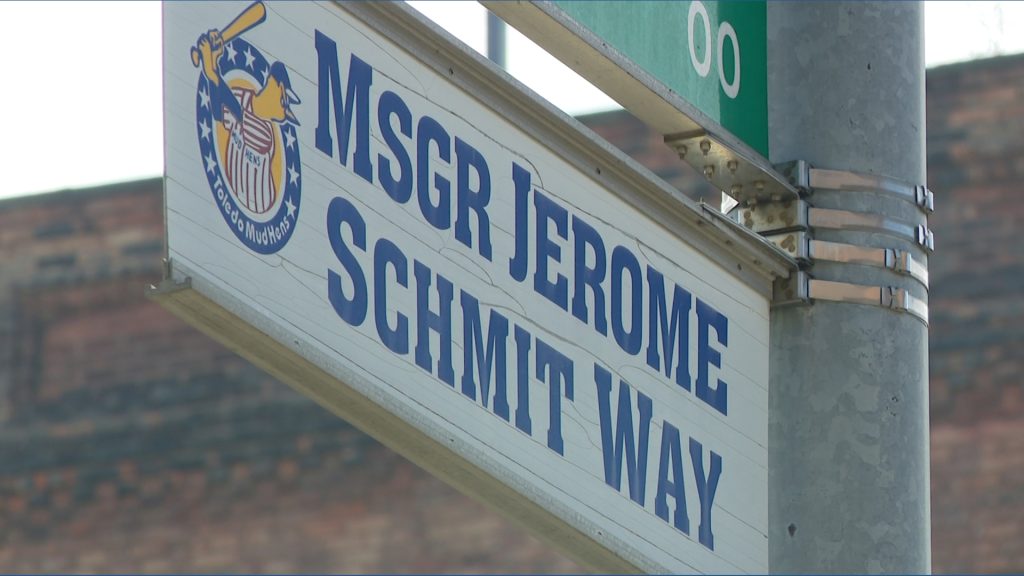
That is why Vercellotti has spent years fighting over a street sign near Fifth Third Field that honors Monsignor Jerome Schmit.

“Who we honor matters,” she says. “There’s no place to honor someone who has obstructed a murder.”
She has asked mayors, bishops and city leaders to take the sign down. She says she has either been ignored or received dismissive letters.

Her frustration is aimed directly at the diocese’s current leadership.

“It is never too late to do the right thing,” she says. “I’d ask them what Jesus would do? How hard is it just to give a full, unabridged accounting and stop making excuses for what you knew and when you knew it?”

For Vercellotti, the case has never been only about one dead nun, one convicted priest or one old scandal. It is about whether truth will ever outrun secrecy. It is about whether the church will ever stop protecting itself first.

And it is about whether Sister Margaret Ann Pahl, who in her view “really lived her vows and embodied her vows fully,” will ever be honored as fiercely as the men who failed her.


Advocates work to reconcile César Chavez’s labor rights legacy with sexual abuse allegations

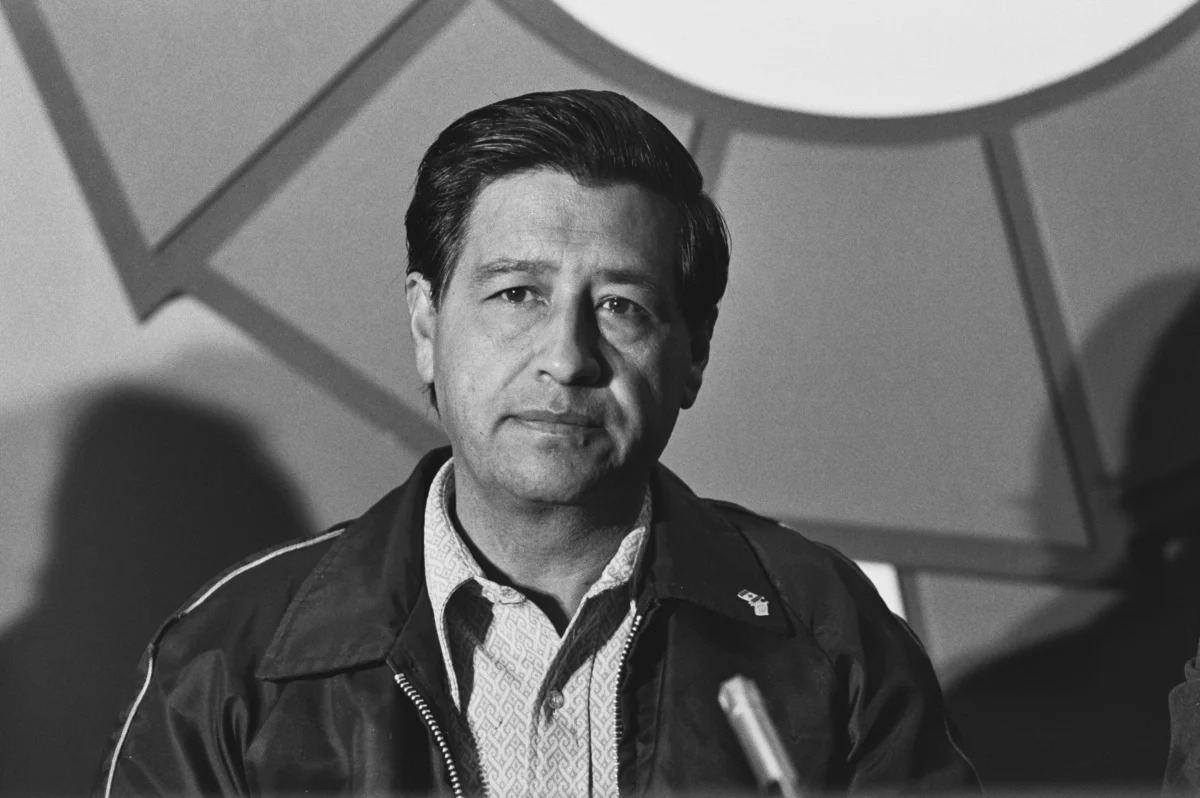
Mary Rose Wilcox and her husband marched and fasted alongside César Chavez. They helped him open a radio station in Phoenix and plastered their Mexican restaurant with photos and a mural of the widely admired Latino icon.

So when Wilcox’s daughter called this week to inform them of sexual abuse allegations leveled against Chavez, she said it felt like a punch to the gut.

By Wednesday morning, the couple had taken down Chavez’s photos from their restaurant walls and made plans to cover the mural.

“We love César Chavez. But we cannot honor him and we cannot even love him anymore,” said the former Phoenix City Council member.

Many like Wilcox are working to reconcile the legacy of a man who fought tirelessly for the rights of farmworkers with stunning allegations that he sexually abused girls and the co-founder of the United Farm Workers of America union, Dolores Huerta.

Latino leaders and community groups quickly condemned the alleged abuse by Chavez but emphasized that the farmworker movement was never just about a single man. Chavez died in California in 1993 at age 66.

There were calls to alter memorials honoring the man who in the 1960s helped secure better wages and working conditions for farmworkers and has been long revered by many Democratic leaders in the U.S. The California Museum said it will remove Chavez from the state’s Hall of Fame — something it’s never done before.

Some local and state leaders in both parties urged their communities not to celebrate Chavez’s birthday on March 31, and to rename buildings and streets named for him. Celebrations for Chavez in California, Texas and in his home state of Arizona have been canceled at the request of the Cesar Chavez Foundation.

Dolores Huerta stamped her own legacy on the fight for justice

Huerta, who is a labor rights legend in her own right, said in a statement released Wednesday that she stayed silent for 60 years for fear her words could hurt the farmworker movement. She said she did not know Chavez had hurt other women.

Huerta described two sexual encounters with Chavez; one in which she was “manipulated and pressured” and another when she was “forced against my will.” She said both led to pregnancies, which she kept secret, and that she arranged for the children to be raised by other families.

She joined Chavez in 1962 to co-found the National Farm Workers Association, which became the United Farm Workers of America. For many, they were akin to Martin Luther King. Jr. and Rosa Parks because of their work advocating for racial equality and civil rights.

Huerta’s resolve and dedication to civil rights, women’s rights and social justice won wide admiration. Some, including a group of Democrats in Texas, are calling for Huerta’s name to replace Chavez’s on places that bear his name.

The New York Times first reported Wednesday that it found Chavez groomed and sexually abused young girls who worked in the movement. Huerta, too, revealed to the newspaper that she was a victim of the abuse in her 30s.

Some knew about Chavez’s abusive behavior, biographer says

Chavez is known nationally for his early organizing in the fields, a hunger strike, a grape boycott and eventual victory in getting growers to negotiate with farmworkers for better wages and working conditions.

Streets, schools and parks across the Southwest bear Chavez’s name. California became the first state to commemorate his birthday, and in 2014, then-President Barack Obama proclaimed March 31 César Chavez Day. President Joe Biden had a bronze bust of Chavez installed in the Oval Office when he moved into the White House.

Biden and Obama have not yet commented on the allegations. California Gov. Gavin Newsom said he was still processing the news.

Chavez was full of contradictions even as a union leader, said Miriam Pawel, a California journalist who wrote a biography of him. There was abusive behaviors within the union, but people didn’t speak out because they believed the union was the best way to protect farmworkers, she said.

“For many, many years, for most of those people, even when they saw things that they found disturbing, they did not wanna talk about it,” Pawel said.

Chavez’s family and foundation voice support for the victims

Born in Yuma, Arizona, Chavez grew up in a Mexican American family that traveled around California picking lettuce, grapes, cotton and other seasonal crops.

Chavez’s family said in a statement that they are devastated by the allegations.

“We wish peace and healing to the survivors and commend their courage to come forward. As a family steeped in the values of equity and justice, we honor the voices of those who feel unheard and who report sexual abuse,” the family said.

The Cesar Chavez Foundation pledged support for the labor leader’s victims, saying — with the Chavez family’s support — the organization will figure out its identity going forward.

The United Farm Workers union quickly distanced itself from annual celebrations of its founder, calling the allegations troubling.

Wilcox, the former Phoenix council member, said Chavez helped people understand the value of workers at all levels.

“There’s two things: Chavez the man and Chavez the man who we didn’t know,” she said. “And the one we knew, we knew the good things he did and the things we saw put in place. … And the one we did not know is like a monster.”

The second death of Cesar Chavez and his legacy

My phone kept going off on Wednesday afternoon with texts from different friends — each wanting to trade thoughts on what felt like the second death of Cesar Chavez. His first death happened on April 23, 1993. He was 66 and died of natural causes. Over 50,000 people attended his funeral in Delano, Calif. And he was posthumously awarded the Presidential Medal of Freedom in 1994.

At that time, I was in elementary school in suburban Chicago, far from California. It was then that I first learned of Chavez and his movement’s hard-fought efforts to secure better wages and improved working conditions for farm workers. As a daughter of janitors and a factory worker, I knew what better pay and the right to a union meant for people like us.

Chávez’s second death landed on Wednesday after a The New York Times investigation revealed he had been accused of sexual abuse and rape. NPR has not independently confirmed the allegations against Chavez in the Times investigation.

For several years before joining Morning Edition as an editor, I covered sexual violence for ProPublica, an investigative newsroom. My work there was often not about catching the bad guys but rather about listening, for extended periods of time, to the people they hurt. This work took me to places such as Alaska and Utah where I met a broad range of people who were assaulted in recent years and some, who like Huerta, never spoke of their experiences for decades.

Consistent with national statistics, the perpetrators whom I wrote about were often family, bosses, clergy or others in positions of power.

This week, many of the voices of the victims I spoke with hearkened back to the experiences that the New York Times‘s investigation revealed in telling of the sexual abuse that Ana Murguia, Debra Rojas and Dolores Huerta shared with the publication. I was grateful to learn Murguia’s and Rojas’ names alongside the much more familiar one of Huerta, the civil rights icon in her own right who co-led the United Farm Workers movement that made Chavez famous.

I’ve learned that there is no timeline for naming what was done to you by people you trusted. I’ve learned that justice for many means the world recognizing the harm done to them — and the difficult work they have done to no longer live defined by it. I’ve learned that people care about protecting others. And that sometimes, by sharing their stories, survivors hope to prevent future harm.

My friends and I may be down a hero this week. But, we gained two new heroes in Ana Murguia and Debra Rojas, who, alongside Dolores Huerta, showed us it’s never too late to speak up. In fact, it might be the only way out for them and others.

Church choir director accused of sexually abusing teen girl in East Meadow

EAST MEADOW (NY)
News 12 [The Bronx NY]

By News 12 Staff

Selvin Bonilla Navarrete, of Westbury, was a church choir director at Iglesia Pentecostal Jesus Es at the time of the incident on Jan. 4.

A 43-year-old man accused of inappropriately touching a teen girl in East Meadow was arrested on Friday.

Selvin Bonilla Navarrete, of Westbury, was a church choir director at Iglesia Pentecostal Jesus Es at the time of the incident on Jan. 4.

Police say he drove the 14-year-old victim to parking lot at 1847 Front St. that afternoon and proceeded to touch her.

Navarrete has since been charged with sexual abuse and endangering the welfare of a child.

He is set to be arraigned Saturday at First District Court in Hempstead.

https://newyork.news12.com/church-choir-director-accused-of-sexually-abusing-teen-girl-in-east-meadow

Statement From Mayor Karen Bass

En Español

한국어

LOS ANGELES – Mayor Bass today issued the following statement:

“I am keeping Dolores Huerta, Ana Murguia, and Debra Rojas in my heart, and I honor their strength and that of every woman and girl horrifically harmed by those in power.

“The sickening reality is that what Dolores, Ana, and Debra endured is not isolated, nor is it of the past. Real progress requires more than moments of reckoning – it demands sustained action to dismantle social, cultural, economic, and political structures that have hurt women throughout our history.

“Dolores and leaders like her inspired so many of us to activism. Mr. Chavez’s crimes do not diminish the courage of farm workers and workers everywhere who fight for their rights, equality for Latinos, and a stronger nation for everyone.”

Catholic priest in Louisiana charged with child sexual abuse

A Roman Catholic priest in the south-west Louisiana diocese, where the US church’s clergy abuse scandal effectively started decades ago, has been formally charged with three counts of felony indecent behavior with a juvenile.

A bill of information from the district attorney for Acadia Parish charges 37-year-old Korey LaVergne with three counts of felony indecent behavior with a juvenile who was 15 at the time of the alleged offenses.

Court documents charge LaVergne with “willfully, unlawfully, knowingly and intentionally [committing] lewd or lascivious acts upon [the] juvenile” – or in the presence of the minor – on or about 1 January 2024. The charges contend that LaVergne had the “intention of arousing or gratifying the sexual desires of either person”.

A document dated 11 March filed by LaVergne’s attorneys state that the clergyman opted to waive his formal arraignment and in writing, pleaded not guilty to the charges outlined in the bill of information.

LaVergne is a priest for the diocese of Lafayette, Louisiana. Another Lafayette diocese priest named Gilbert Gauthe brought the Catholic clergy abuse crisis to the US’s collective conscience by pleading guilty in 1985 to molesting several boys he encountered through his ministry.

He served 10 years in prison and now lives in Texas, and he has continued to be named in civil lawsuits from victims seeking damages from the Lafayette diocese over their abuse at Gauthe’s hands.

LaVergne’s formal charges came after he was arrested in mid-January on the same three counts referred to in the bill of information.

At the time, records showed that LaVergne, the pastor at the St Edward Catholic church in the community of Richard, posted bail of $15,000 less than 90 minutes after being jailed. That secured his release from custody while the case proceeds.

A week after his arrest, the Guardian obtained the investigators’ initial report on the case, which stated that LaVergne had been jailed after local authorities were told that the clergyman had “inappropriately touched a child” over the course of a year.

The Lafayette news station KADN reported on 16 January that another priest had reported the allegations against LaVergne to authorities prior to his arrest.

A pretrial hearing in the case has been tentatively scheduled for 12 June after LaVergne’s attorney filed a series of standard court motions, records show.

Neither LaVergne nor his attorney immediately responded to requests for comment from the Guardian on Friday regarding the formal charges.

LaVergne faces a maximum sentence of seven years in prison and up to $5,000 in fines.

Generally, under Louisiana law, indecent behavior with a juvenile can be punished with up to seven years in prison.

The state defines the offense as “any lewd or lascivious act … in the presence of any child under the age of 17”. The law also states that messages – including texts – and actions alleged to constitute grooming can fall under the offense.

 In the US, call or text the Childhelp abuse hotline on 800-422-4453 or visit their website for more resources and to report child abuse or DM for help. For adult survivors of child abuse, help is available at ascasupport.org. In the UK, the NSPCC offers support to children on 0800 1111, and adults concerned about a child on 0808 800 5000. The National Association for People Abused in Childhood (Napac) offers support for adult survivors on 0808 801 0331. In Australia, children, young adults, parents and teachers can contact the Kids Helpline on 1800 55 1800, or Bravehearts on 1800 272 831, and adult survivors can contact Blue Knot Foundation on 1300 657 380. Other sources of help can be found at Child Helplines International

Catholic Church should signal a new era by welcoming legal inquiries

SEATTLE (WA)
Seattle Times [Seattle, WA]

By The Seattle Times editorial board

Leaders of the Catholic Church in Washington have made many statements of contrition for the decades when priests’ sexual abuse of children went unexamined and largely unpunished. But if the church truly wanted to atone for those criminal acts — and the lifelong damage they’ve caused parishioners — it would embrace full transparency.

That’s the best way to show that this is a new era.

Instead, for more than 20 years, the Archdiocese of Seattle has zealously fought against an independent review of its files, hiding behind claims that opening the records to scrutiny might “re-traumatize” victims.

What likely worries the church more are potential legal costs that could arise. The Archdiocese has already paid over $100 million in settlements, according to attorneys who’ve represented abuse victims in Western Washington, and new revelations could increase that tally.

Yet earlier this month, in a brave and welcome ruling, the Washington State Court of Appeals affirmed that the attorney general may subpoena church records to find out whether charitable contributions were used to conceal child sex abuse.

“It’s a great victory for survivors,” said retired Judge Terrence Carroll, a lifelong Catholic and co-founder of the reform group Heal Our Church. “Our view is: Deal with this sordid chapter to get past it.”

Carroll, who has read some of the files privately, discovered cases that have never been aired. “The concern of a cover-up is great,” he said. “The whole story has not been told.”

Despite an avalanche of revelations that came to light in the early 2000s about child sexual abuse at the hands of Catholic clergy nationwide, more recent inquiries have shown that the scope of these crimes may be even broader than realized. In Rhode Island, for instance, a new investigation revealed 75 priests who’d abused more than 300 children. Only 20 of those clerics were ever charged. Another dozen were laicized, or removed from the clergy.

The Washington court was ruling on a filing made by Gov. Bob Ferguson in 2023, when he was attorney general. In other states, like Maryland and Illinois, the church has been more willing to cooperate, Ferguson said. And when their files were opened, the records revealed “quadruple the number of credibly accused abusers than the Church had voluntarily disclosed.”

The church is supposed to be a place of solace. To make good on that mission, it must do more than issue empty platitudes. It must open its files and show, definitively, that a new day has arrived.

The Seattle Times editorial board: members are editorial page editor Kate Riley, Ryan Blethen, Melissa Davis, Josh Farley, Alex Fryer, Claudia Rowe, Carlton Winfrey, Frank A. Blethen (emeritus) and William K. Blethen (emeritus).

https://www.seattletimes.com/opinion/editorials/the-catholic-church-should-signal-a-new-era-by-welcoming-legal-inquiries/

Meet the driving force behind a new bill to combat clergy sex abuse

by BRIAN JOSEPH

After Hermina Nedelescu settled in San Diego in 2016, the neuroscientist found comfort and familiarity in Saints Constantine and Helen Greek Orthodox Church.

The gold-domed church with its colorful sanctuary and polished, stone columns reminded her of her native Romania, which she left in 1990 when she was 9 years old. She also respected the church’s leader, Father Michael Sitaras, who turned to her for advice during the pandemic.

A PhD staff scientist with the Scripps Research Institute in San Diego, Nedelescu studies abnormal behaviors and brain functions, but was happy to help when COVID-19 had parishioners panicked.

Nedelescu advised Sitaras on things like wearing masks and the COVID vaccines. Over time they became close and when the pandemic ended, she continued working with him on advancing the role of women within the patriarchal culture of the Greek Orthodox church.

That’s when she says her life and research interests changed, and she transformed into an advocate for state legislation to hold clergy accountable for sexual abuse.

Nearly three years ago, at a September 2023 meeting with Sitaras at her lab, Nedelescu says he propositioned her for sex and groped her.

She says the experience sent her into a tailspin. She said she developed post-traumatic stress disorder and sought psychotherapy for the first time in her life, a development she found surprising given that she never needed it previously as a refugee from Romania.

In November 2025, she filed a suit against Sitaras and the church. The case is ongoing. Sitaras did not respond to a Capitol Weekly request for comment.

“My eyes are now open to the abuse that women experience,” Nedelescu said. “There is a Hermina prior to being sexually assaulted, and after is a completely different person now,” she said.

Before Nedelescu said her professional research had focused on the impact of drug use on brain functions. But after her encounter with Sitaras she said she’s become fascinated by ways sexual abuse can affect the brain.

“I’ve always been interested in how the environment and experiences change the brain,” she said. “So, much of that work has been dedicated to how drugs affect the brain, how drugs negatively impact the brain. And so, it’s not a big jump for me to consider now how does sexual abuse leading to sexual trauma – because it always leads to sexual trauma – how does that impact the brain?”

Nedelescu said she’s now seeking funding for new research into the impact of sexual trauma on the brain and the body.

“My eyes are now open to abuse that women experience….There is a Hermina prior to being sexually assaulted and after is a completely different person now.”

“I think that I have a moral obligation and a duty to do this because I’ve experienced this firsthand,” she said.

At the same time, Nedelescu said she also felt called to advocate for change. In 2023, a colleague – Katherine Archer, a researcher and advocate with her own pending suit involving church-related sexual abuse – clued her into a bill by former Sen. Dave Min that sought to create a new criminal offense, sexual exploitation by a member of the clergy.

Min’s bill, SB 894, was held up in the Senate Committee on Public Safety in April 2024. The committee’s analysis noted that the California Public Defenders Association opposed the bill on the grounds that it was overbroad and created an unprecedented new crime.

Nedelescu said she studied the criticisms and looked at laws elsewhere. Fourteen states plus the District of Columbia have criminal statutes involving clergy sexual abuse. Nedelescu discovered in most of those states members of the clergy were simply tacked onto existing laws banning doctors, therapists and other professionals from having sexual contact with patients or clients.

Looking for help, Nedelescu approached Assemblymember Buffy Wick (D-Oakland), who agreed to shepherd an unbacked bill through Legislative Counsel to add members of the clergy to California’s own list of barred professionals, Business and Professions Code Section 729.

On March 9, Assemblymember Chris Ward (D-San Diego) gutted AB 1739 and amended it with the language, which echoes a similar pending proposal in the Georgia Legislature.

Nedelescu celebrates the milestone but also recognizes that Ward’s sponsorship is complicating. Sexual abuse survivors have protested outside of his district office on multiple occasions over the last few months. They accuse him of working in secret to undermine their legal rights in order to protect local governments from the financial strain of paying sexual abuse claims.

The cost of those claims have become a major concern in the wake of 2019’s AB 218 by then-Assemblymember Lorenza Gonzalez, now the head of the California Federation of Labor Unions. That bill opened a special, three-year window that temporarily suspended the state’s traditional statute of limitations and allowed survivors of childhood sexual abuse to file claims on events that occurred decades in the past

School districts in general and Los Angeles County in particular were hit hard. The county last year agreed to pay billions of dollars to settle claims connected to its juvenile detention facilities dating back to 1959.

Survivors think Ward may have agreed to take on Nedelescu’s bill in order to negate their criticisms. Ward said that’s not true.

“No,” he said, calling AB 1739 “consistent with the work that I have done for previous years.”

The assemblymember added that his work on government liability is no secret.

“We are hearing loud and clear from schools, cities, counties and other entities that they are running into a real, exponential problem in the terms of the liability issues that are out there,” he said.

Claims are “very much stressing county services, city services and might be bankrupting a couple of school districts,” he said. “We have to take a close attention to something that is both going to support the liability insurance and the needs of today’s students and today’s social services without violating the rights of victims.”

Nedelescu, for her part, is undeterred, saying she’s committed to seeing the new language in AB 1739 become law. The bill is expected to be heard before the Assembly Committee on Public Safety on March 24.

“This really needs to pass. These churches have gotten away with this for a long time,” Nedelescu said. “I’m not going to stop because this is the new me,” she added. “This is what I do now.”